 USA
USA France
  Germany
  Netherlands
  United Kingdom
  Spain
Spain  Italy
Italy  Canada (FR)
  Mexico
  Australia
 Electric forklift vs propane: which is the better buy for your operation?

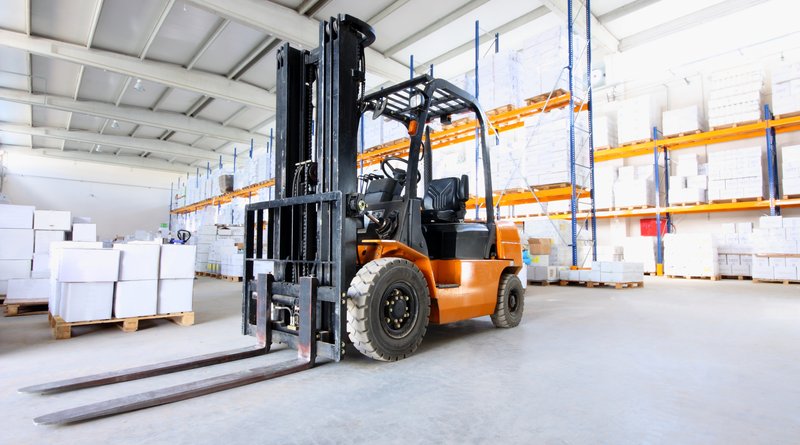
If you’re weighing electric forklift vs propane for your next purchase, the short answer is: electric wins on total cost of ownership in most indoor operations, while propane still holds a practical edge in high-throughput outdoor and multi-shift environments. The right choice depends on your shift structure, facility type, and how long you plan to hold the asset. Here’s what the numbers and real-world use actually look like.
Upfront cost: how do electric and propane forklifts compare?
Propane forklifts are generally cheaper to buy outright — new units typically run $20,000–$35,000 depending on capacity, while new electric forklifts in the same capacity range sit at $25,000–$45,000. The gap narrows significantly in the used market. A used electric counterbalance forklift from a warehouse fleet often carries lower asking prices than an equivalent propane unit because battery condition uncertainty suppresses buyer confidence — which is actually an opportunity for buyers who know how to inspect batteries.
If you’re shopping used forklifts at auction, expect to find both types at significant discounts to retail. The battery question is key for electric units — more on that below.
Total cost of ownership: where the real difference shows up
Fuel costs
This is where electric forklifts pull ahead decisively. Electricity typically costs $1.50–$3.00 per shift to recharge a standard 48V or 80V battery, depending on your local electricity rate. Propane runs $10–$20 per shift when you factor in cylinder consumption at typical LPG prices. Over a 250-day work year on a single shift, that’s a fuel cost gap of roughly $1,750–$4,250 per year — per truck.
 1990 Brenner MC3070 Tanker Trailer
Maintenance costs
Electric forklifts have fewer moving parts — no engine oil, no spark plugs, no transmission fluid, no radiator. Maintenance costs typically run 25–40% lower than propane equivalents over a comparable operating life. Propane units require regular engine servicing that adds up over a five-to-ten-year hold period.
Battery replacement cost
This is the largest financial variable for electric forklifts. A replacement lead-acid battery for a standard counterbalance forklift costs $3,000–$8,000 installed. Lithium-ion batteries cost more upfront ($8,000–$20,000) but charge faster, last longer, and tolerate opportunity charging without the memory effect. When buying used, always get a battery state-of-health reading — a battery below 80% capacity is near end of life and the cost needs to factor into your offer.
Performance and application: which type fits your operation?
Indoor warehouse operations
Electric forklifts are the clear choice for indoor use. Zero emissions means no ventilation requirements, no carbon monoxide risk, and no issues with food-grade or pharmaceutical facility certifications. Cushion-tire electric models are purpose-built for smooth concrete floors — the cushion tire forklift category at auction is dominated by electric units for exactly this reason.
Outdoor and multi-shift operations
Propane forklifts retain a real advantage here. Refuelling takes two minutes — swap the cylinder and you’re back to work. Electric forklifts on lead-acid batteries require 8 hours of charging for a full shift, which means multi-shift operations either need multiple battery sets per truck (adding cost) or need to invest in lithium-ion. In cold storage environments, lead-acid batteries lose 20–30% capacity, making propane more reliable in freezer applications.
Rough terrain and outdoor yards
If your work takes place on uneven ground, gravel yards, or job sites, pneumatic-tire forklifts are the relevant category — and propane dominates here. Pneumatic tire forklifts in the propane or diesel configuration are built for the traction and durability outdoor environments demand. Electric rough terrain models exist but are less common and carry a significant price premium.
 2006 Great Dane Van Trailer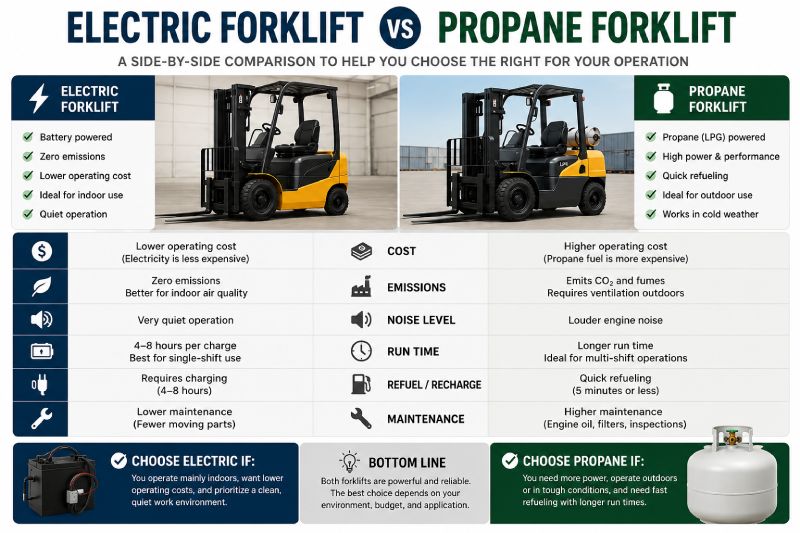
Resale value: which holds value better?
Propane forklifts have historically held resale value well because buyers don’t face the battery uncertainty that comes with used electric units. However, this gap is closing as lithium-ion adoption grows and battery transparency improves. In the used market today:
- Propane forklifts with a full service history and known hours sell predictably. Buyers understand what they’re getting.
- Electric forklifts with documented battery health and recent battery replacement can sell at a premium over comparable propane units — particularly electric counterbalance forklifts from major fleet disposals where maintenance records are clean.
As a seller, documenting battery condition is the single highest-leverage action you can take to protect resale value on an electric unit.
Used forklift buying guide: what to inspect before you buy
Whether you’re buying electric or propane, these are the inspection points that separate a good purchase from an expensive mistake.
For electric forklifts
- Battery state of health: Use a battery analyser or ask for a recent load test report. Anything below 80% capacity means replacement is near.
- Charging history: Opportunity charging damages lead-acid batteries. Ask about charging discipline.
- Controller and motor condition: Look for evidence of overheating or water damage on the drive and lift motors.
- Mast and hydraulics: Check for cylinder seal leaks and chain wear — these are expensive repairs regardless of power type.
- Hours vs. battery cycles: High hours on a newer battery is a good sign. Low hours with an original 10-year-old battery is not.
For propane forklifts
- Engine compression and oil condition: Do a compression test if possible. Check for blue smoke on startup, which signals worn rings.
- Transmission: Test all functions under load — propane forklifts that have been abused often show transmission slippage first.
- Cylinder valve and regulator condition: These are wear items that need inspection for leaks.
- Mast and carriage wear: Check for cracked weld points, worn rollers, and chain stretch.
- Exhaust emissions: A properly tuned propane forklift should produce clean exhaust. Black or excessive smoke signals carburetion or timing problems.
Side-by-side comparison
| Factor | Electric | Propane |
|---|---|---|
| Purchase price (new) | $25,000–$45,000 | $20,000–$35,000 |
| Fuel cost per shift | $1.50–$3.00 | $10–$20 |
| Maintenance cost | Lower | Higher |
| Refuel/recharge time | 6–8 hrs (lead-acid) / 1–2 hrs (Li-ion) | 2 minutes |
| Indoor suitability | Excellent | Acceptable (with ventilation) |
| Outdoor suitability | Limited | Good |
| Cold storage performance | Reduced (lead-acid) | Full |
| Resale predictability | Variable (battery-dependent) | Consistent |
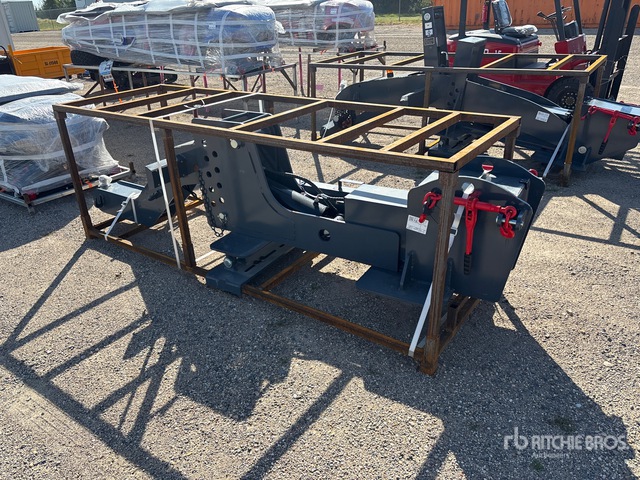 2026 PROMECH FW80 Fifth Wheel Wrecker Attachment
Which is the best forklift to buy?
For most single-shift indoor warehouse operations, electric is the better long-term buy — lower fuel costs, lower maintenance, and cleaner compliance make the economics compelling over a 5–10 year hold. For multi-shift operations, outdoor yards, or any environment where two-minute refuelling is operationally critical, propane remains the more practical choice unless you’re willing to invest in lithium-ion charging infrastructure.
The used market offers strong value in both categories. The key is buying with eyes open — battery health for electric, engine and transmission condition for propane. Both power types have proven track records in commercial fleets, and both trade regularly at Ritchie Bros. auctions where you can compare real-world asking prices, hours, and condition documentation before you bid.
 |
RB Purchase vs. RB Guarantee: Which Guaranteed Selling Option Is Right for You? |
 1990 Brenner MC3070 Tanker Trailer
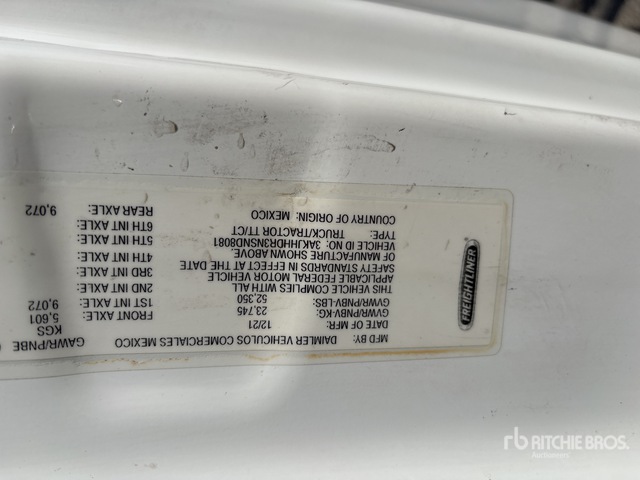 2022 Freightliner Cascadia 126 T/A Sleeper Truck Tractor
 2012 Ford F-450 Dump Truck: Light Duty2026 PROMECH FW80 Fifth Wheel Wrecker Attachment2006 Great Dane Van Trailer
 2022 Freightliner Cascadia 126 T/A Sleeper Truck Tractor
 2015 Ledwell Hydraulic Tail Trailer
 2019 Ford F-150 Pickup
 2018 International 4300 Van Truck
 2018 Peterbilt 579 S/A Day Cab Truck Tractor
 2014 Peterbilt 388 T/A Day Cab Truck Tractor
 2025 Mercedes-Benz Sprinter Cargo Van
 2019 Peterbilt 579 T/A Sleeper Truck Tractor
 2015 Ford F-750 Service Truck
 2019 Ford F-150 Pickup
 2020 Felling FT-6DT-E-TRL01 Dump Utility Trailer
 2026 GIYI GY-KH72 Skid Steer Bucket
 2026 GIYI GY-X39 Skid Steer Trencher
 2012 Cat 308E CR Tracked Excavator
 Excavator Coupler
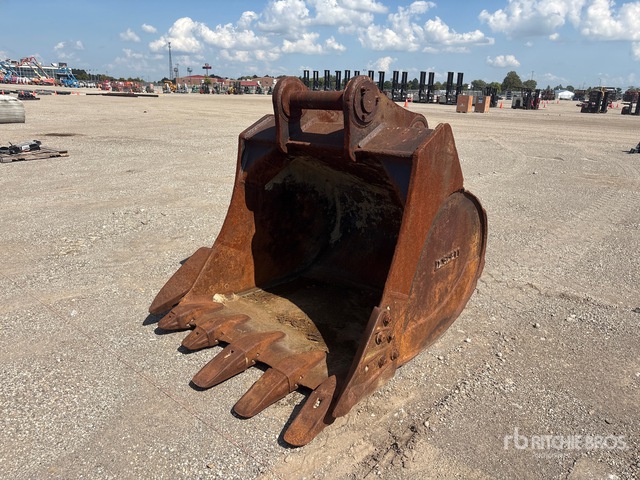 Geith Excavator Bucket
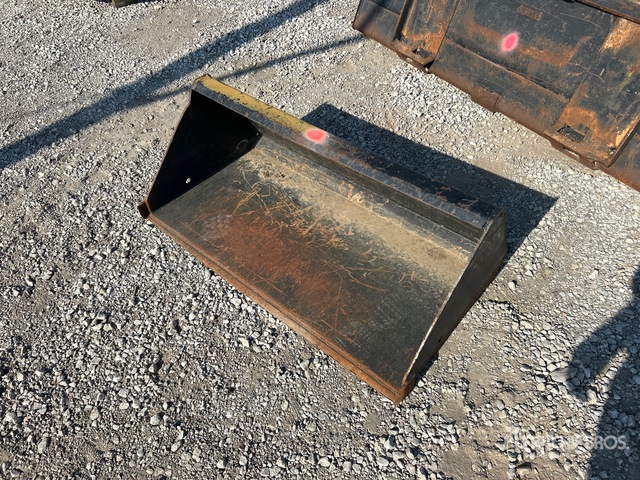 Skid Steer Bucket
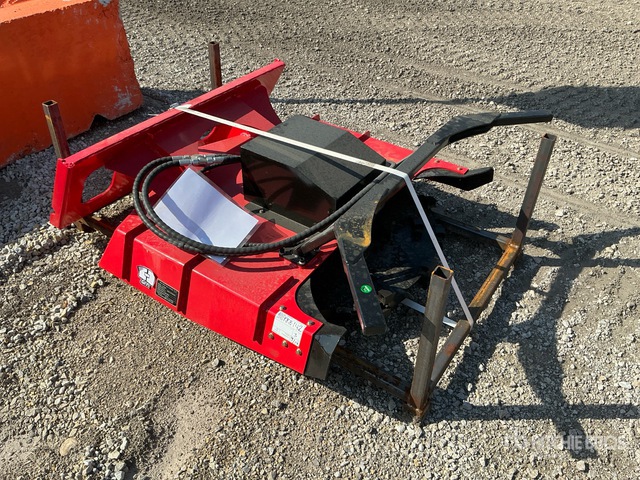 2026 GIYI GYx-DM43 Skid Steer Mulcher
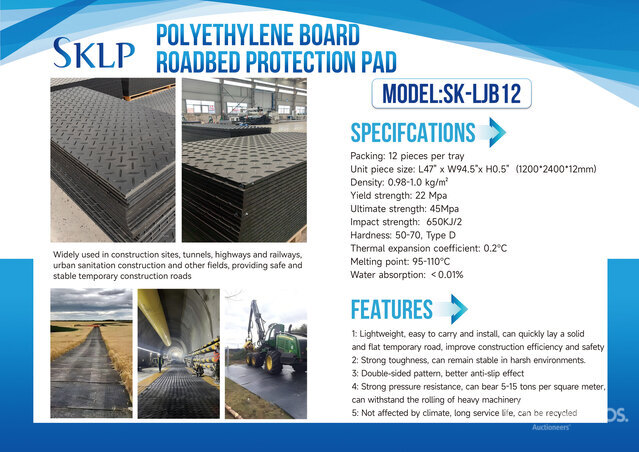 2026 SKLP SK-LJB12 Misc. Traffic Control Device
 2021 Clarke EX20-100H