
How to Start a Junk Removal Business in 2026
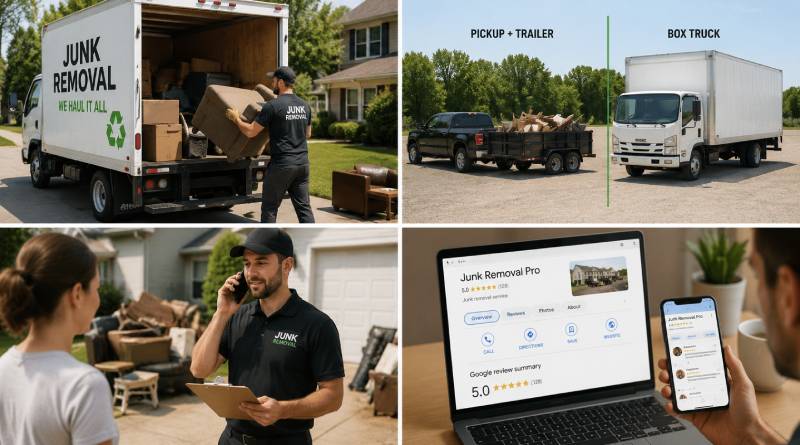
Starting a junk removal business is one of the most accessible paths into self-employment. Startup costs are low, demand is reliable, and you can be operational within weeks. The core model is straightforward: customers pay you to haul away items they no longer want, and you earn on volume, speed, and repeat business.
This guide walks you through every stage — licensing, equipment, pricing, and marketing — with the specifics you need to make real decisions, not just get inspired.
Is a junk removal business profitable?
Yes — when structured correctly, junk removal generates strong margins. Owner-operators typically clear $50,000 to $100,000 per year in their first few years, with established multi-truck operations reaching well above that. Your gross margin on a job often runs 60–70% once you account for fuel, disposal fees, and labor, with no raw materials or inventory eating into it.
The business has two reliable demand drivers: residential clients decluttering homes and moving, and commercial clients (property managers, contractors, estate companies) clearing sites on a recurring basis. Commercial accounts are the higher-value segment — they book larger loads, pay faster, and repeat regularly.
Profitability depends on three variables you control: how efficiently you fill a truck per run, what you charge per load, and how much of what you haul you can resell or recycle rather than dump. Operators who develop relationships with resellers and recyclers consistently outperform those who pay to dump everything.
What do you need to start a junk removal business?
Before your first job, you need four things in place: a legal business structure, the right insurance, a junk removal truck, and a way to dispose of what you collect. Everything else — branding, software, a website — can be built as you go. Getting these four foundations wrong is what can cause most early failures.
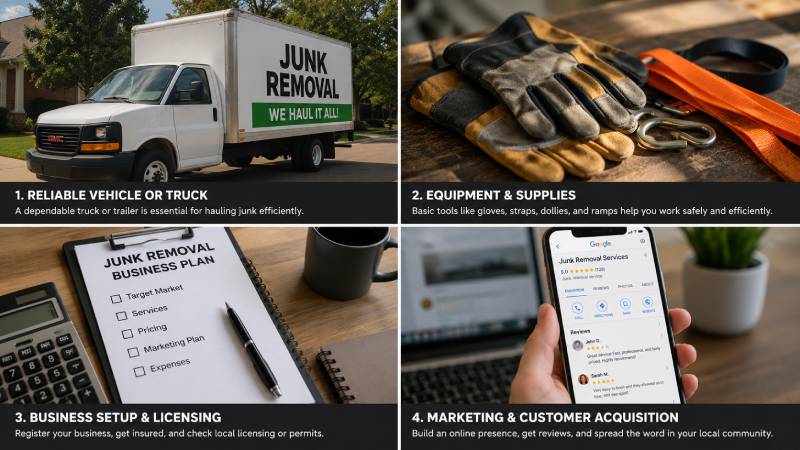
Step 1: Set up your legal structure and licenses
What licenses do you need for a junk removal business?
Requirements vary by state and municipality, but most operators need the following:
Business registration. Register your business name with your state. An LLC is the standard choice — it separates your personal assets from business liability and costs $50–$500 depending on your state.
General business license. Most cities and counties require a basic business operating license, typically $50–$150 annually. Check your local city clerk or county website.
Waste hauler permit. This is the one most new operators miss. Many states require a separate permit to transport and dispose of solid waste commercially. In California, for example, you need a permit from your local CalRecycle-approved transfer station. Check your state environmental agency’s website for the specific requirement.
DOT number. If your gross vehicle weight rating (GVWR) exceeds 10,001 lbs — which most cargo trucks used in junk removal do — you need a USDOT number. Registration is free at the FMCSA website.
Resale certificate. If you plan to resell items you haul, a resale certificate lets you buy inventory tax-free and collect sales tax on resales where applicable.
Plan for 2–4 weeks for all registrations to process. Skipping the waste hauler permit is the most common legal mistake in this business — fines for unlicensed commercial waste hauling are steep.
Step 2: Get the right insurance
Junk removal carries real liability exposure — damage to a client’s property, injuries on a job site, or accidents in transit. Three policies matter:
General liability insurance. Covers property damage and bodily injury claims. Expect $500–$1,500 per year. Most commercial clients will ask for a certificate of insurance before hiring you.
Commercial auto insurance. Personal auto policies don’t cover vehicles used commercially. A commercial policy for a box truck or pickup runs $1,500–$3,000+ per year depending on the vehicle and driving history.
Workers’ compensation. Required in most states the moment you hire your first employee. Even as a solo operator, some clients will require it before you can work on their property.
Bundle general liability and commercial auto where possible — many insurers offer package pricing for service businesses that saves 10–20% compared to separate policies.
Step 3: Choose and equip your truck
What equipment do you need for a junk removal business?
Your truck is your biggest upfront decision. The three most common options:
Pickup truck with a utility trailer. The lowest-cost entry point — if you already own a capable pickup, adding a 6×12 or 7×16 enclosed or open trailer keeps startup costs under $5,000. Limitations: smaller loads, multiple trips, and some items require securing that slows you down.
Box truck (14–20 ft.). The industry standard. A 16-foot box truck holds approximately 10 cubic yards of material — enough to clear an average two-bedroom apartment in one run. Used box trucks in the $15,000–$30,000 range are widely available at commercial auctions and are the most cost-effective entry into high-volume residential work.
Roll-off truck. Higher capital cost ($60,000–$150,000+), but opens the door to dumpster rental as a second revenue stream. Most operators add this as a growth vehicle, not a starter vehicle.
Beyond the truck, your basic kit includes heavy-duty work gloves, furniture dollies, strapping and tie-downs, a box cutter and utility knife set, and reusable tarps to protect the truck bed and any items you’re reselling. Budget $500–$1,000 for this equipment.
Buying used vs. new
A used box truck from Ritchie Bros. auctions will typically cost less than a dealer-priced equivalent. The tradeoff is that you need to account for mechanical inspection costs and potential near-term maintenance. Many operators starting out find the auction market the most practical path to their first truck — particularly for well-maintained commercial fleet vehicles with documented service history.
The Ritchie Bros. advantage – free pricing info
Sign up for a free Ritchie Bros. account to see recently sold prices on used trucks before you bid. Filtering by condition, mileage, and year shows you what similar trucks actually sold for — not list prices or asking prices, but real closing numbers. That’s the difference between guessing at a fair bid and walking into an auction knowing your ceiling.
Step 4: Build your disposal network
Where your waste goes determines a significant chunk of your operating cost. Before you take your first job, establish accounts at:
Your local transfer station or landfill. Rates vary by region — budget $50–$150 per ton as a baseline. Some charge flat rates by load size. Set up a commercial account if available; it typically gets you faster processing and monthly invoicing.
Recycling drop-offs. Metal recyclers will often pay you for clean loads of ferrous and non-ferrous metal. Even modest metal recovery can offset multiple dump runs per week. Identify the nearest scrap yard and understand their minimum load requirements.
Donation centers. Habitat for Humanity ReStores and similar outlets accept furniture, appliances, and building materials in working condition. A donation policy differentiates your service (“we recycle and donate what we can”) and reduces your disposal costs.
Resale channels. Facebook Marketplace, Craigslist, and local buy/sell apps are practical channels for reselling furniture, tools, and electronics in good condition. Some operators generate $500–$2,000/month in resale revenue alongside their core hauling business.
Step 5: Set your pricing
How do junk removal businesses price their services?
The industry uses two primary pricing models:
Volume-based pricing (load pricing). You charge by what fraction of your truck’s capacity the job fills — 1/4 load, 1/2 load, 3/4 load, full load. This is the standard model used by most regional operators. It’s easy for customers to understand and easy for you to estimate on-site.
Typical rates in most U.S. markets:
| Load size | Price range |
|---|---|
| Minimum load / single item | $75–$150 |
| 1/4 truck | $150–$250 |
| 1/2 truck | $250–$400 |
| 3/4 truck | $350–$550 |
| Full truck | $450–$700+ |
Rates vary meaningfully by market — urban areas with higher disposal costs and demand often run 20–40% higher than rural markets.
Item-based pricing. Flat fees per item type — $50 for a couch, $75 for a mattress, $150 for a refrigerator. This works for single-item pickups and is easier to quote over the phone or via text, but becomes harder to manage on mixed-load jobs.
Most operators combine both: volume pricing for general loads, flat item fees for single or specialty pickups.
Additional charges to build in. Disposal fees for hazardous materials (paint, electronics, tires) are typically passed through to the customer at cost plus a handling fee. Stairs, long carry distances, and disassembly should be quoted as add-ons — they add labor time that a flat load price doesn’t account for.
How much can a junk removal business make?
A solo operator with one truck working five days per week, averaging three jobs per day at an average ticket of $250, generates roughly $187,500 in gross revenue per year. After fuel ($15,000–$20,000), disposal fees ($20,000–$30,000), insurance ($3,000–$5,000), and equipment maintenance, a well-run solo operation nets $100,000–$130,000. Adding a second truck and driver typically doubles revenue without doubling the operator’s time.
Step 6: Market your junk removal business
How do you market a junk removal business?
Junk removal is a local search business. The vast majority of new customers find a junk removal company the same way: they search “junk removal near me” on Google, call the first 2–3 results, and book the fastest response. Your marketing priority should be capturing that moment.
Google Business Profile. Claim and fully optimize your Google Business Profile before you do anything else. Fill in every field — service areas, hours, photos of your truck and team, a description with your city name. Reviews are the single highest-leverage item here: a profile with 20+ reviews at 4.8 stars will consistently outconvert one with 5 reviews at 5.0 stars.
Local SEO. Your website needs a page that targets “[city] junk removal” as its primary keyword. This doesn’t require a large site — a clean, fast-loading service page with your phone number prominent, a few photos, your service area, and a short description is enough to rank in small-to-mid-size markets.
Yard signs and door hangers. Low-tech but effective. After each job, ask the customer if you can leave a yard sign for a week. In neighborhoods where you’ve just worked, distribute door hangers on adjacent streets — you’ve already proved you’re operating nearby.
Nextdoor. Free to use, and junk removal recommendations travel fast in neighborhood groups. Create a business page, be active in relevant posts, and respond quickly when someone asks for a referral.
Facebook Marketplace. Post a service listing. Customers who are already on Marketplace looking at items to buy also often need junk removed — you’re reaching them in context.
Referral partnerships. Real estate agents, property managers, estate attorneys, and senior move managers all regularly need junk removal for their clients. A relationship with one active property manager can generate more consistent volume than any paid ad campaign.
Paid search (Google Ads). Once you have your Google Business Profile and website in place, a modest Google Ads budget ($300–$500/month) targeting “[city] junk removal” and “junk removal near me” can generate a predictable lead flow while your organic rankings build. The cost-per-lead in most markets runs $15–$40.
Building toward scale
The fastest path to growing beyond a solo operation is converting residential one-time clients into repeat business with commercial accounts. Property management companies, apartment complexes, and real estate investors create a baseline of predictable volume that lets you staff and schedule efficiently.
Once you have consistent monthly revenue from 3–5 commercial accounts, a second truck and driver becomes self-funding within 6–12 months. The economics of junk removal reward efficient routing and high daily job volume — every marginal job added to an existing route costs you almost nothing in fixed overhead.
For operators looking to acquire a truck, trailer, or expand their fleet without dealer-level capital costs, commercial auctions are worth understanding early. Used commercial trucks and box trucks sold through fleet liquidation events frequently sell at 40–60% below retail replacement cost, and the inspection periods prior to auction allow for independent mechanical review.
Ready to find equipment for your junk removal business?
Ritchie Bros. auctions used trucks, trailers, and commercial vehicles across North America.


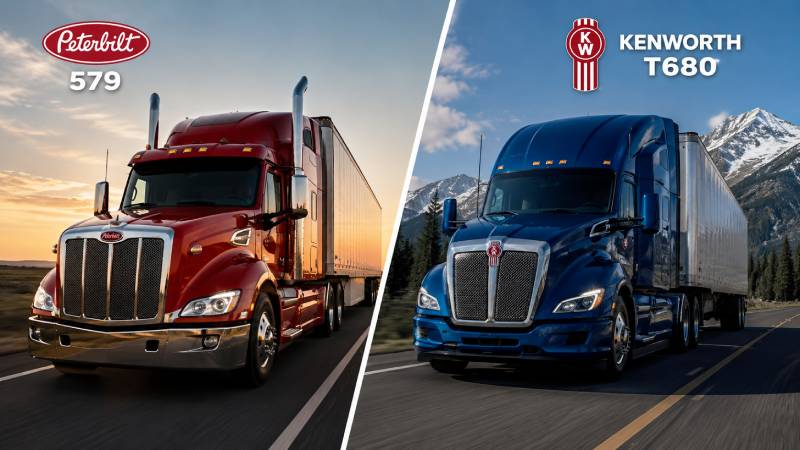 |
Peterbilt vs. Kenworth: Which truck has the best resale value? |


Ritchie Bros. is a one-stop-shop for everything your equipment and truck business needs to succeed - buying and selling solutions, market insights and valuation, global buyer demand, and fleet management tools.
Ritchie Bros., Two Westbrook Corporate Center, Suite #1000 Westchester, Illinois, 60154 | +1.800.663.8457