 USA/CAN
 France
  Germany
  United Kingdom
  Netherlands
  Spain
Spain  Italy
Italy  Canada (FR)
  Mexico
  Australia
 Types of balers for different farm operations


Choosing the right baler shapes everything downstream — storage logistics, feeding efficiency, transport costs, and how quickly you can move hay off the field. Whether you’re buying your first machine or upgrading a working fleet, understanding the core baler types and how they perform against real farm conditions is the place to start.
What is a baler?
A baler is a piece of farm machinery that compresses cut and dried forage — hay, straw, silage, or crop residue — into compact, uniform bales for storage, transport, or sale. Balers are pulled by a tractor and fed by a pick-up head that gathers the windrow from the ground. The machine then compresses the material and secures it with twine, net wrap, or wire before ejecting the finished bale. The bale shape, density, and size depend entirely on the baler type.
Types of balers for different farm operations

The four main baler categories are round balers, small square balers, large square balers, and combination baler-wrappers. Each suits a different scale of operation, end use, and handling setup. Specialty equipment — including swath rollers and flax bunchers — rounds out the category for producers with specific crop requirements.
Square balers vs round balers
The core choice for most producers comes down to square balers versus round balers, and the right answer depends on your market, labour, and handling equipment.
Small square balers produce rectangular bales typically weighing 40–75 lb (18–34 kg). They are manually stackable, making them ideal for horse hay markets, direct retail sales, and small hobby farms where hand-stacking and individual bale handling is practical. They require more labour per tonne of hay but command a higher per-bale retail price.
Large square balers produce bales in the 3×3, 3×4, or 4×4 ft format, weighing anywhere from 800 to 2,200 lb (360–1,000 kg). These are built for high-volume commercial hay production, export markets, and feedlots where loader-based handling is standard. Throughput is high and labour per tonne is low — but the capital cost and power requirements are significantly greater.
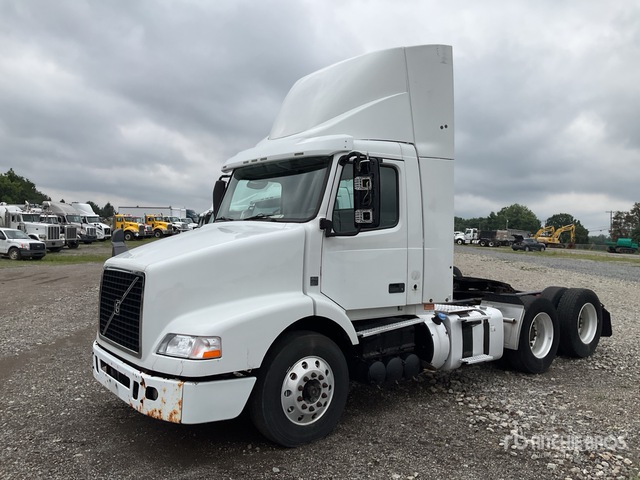 2017 Volvo VNM T/A Day Cab Truck Tractor
Round balers produce cylindrical bales typically 4–6 ft in diameter and 4–5 ft wide. They are the dominant choice across North American mixed livestock and grain farms because of their balance between cost, throughput, and weather resistance. A tightly wrapped round bale sheds rain more effectively than an uncovered small square bale, which matters for operations with outdoor storage. You can browse used square balers for sale or compare round baler listings to see the current market spread.
Combination baler-wrappers add in-line plastic wrapping to produce silage bales from fresh-cut forage. This is the preferred setup for wet-climate hay and high-moisture haylage production. A combination baler-wrapper eliminates the extra step of a standalone wrapper, which matters when timing is tight and moisture content needs to be locked in quickly.
How many square bales are in a round bale?
One standard round bale (5×6 ft, approximately 1,000–1,200 lb) is roughly equivalent to 20–25 small square bales at 50 lb each. The exact number varies based on the density settings on both machines, the moisture level at baling, and the crop type. For feeding comparisons, most nutritionists calculate on a dry matter weight basis rather than bale count alone.
Hay bale weights and specifications
Weight varies significantly across bale types and crops. Knowing the numbers matters for transport compliance, loader capacity, and feeding ration planning.
How much does a bale of hay weigh?
A small square bale of hay typically weighs between 40 and 75 lb (18–34 kg), depending on flake count, crop density, and moisture at baling. Three-string large square bales run 100–140 lb per bale. Dry weight matters most for nutrition — bales baled slightly green can run 10–20% heavier than their dry matter equivalent.
How much does a round bale of hay weigh?
A standard 5×6 ft round bale of grass or mixed hay weighs approximately 1,000–1,200 lb (450–545 kg) at proper dry baling moisture (below 18%). Alfalfa round bales run denser, often reaching 1,200–1,500 lb (545–680 kg) for the same dimensions. A 4×5 ft bale — common for smaller operations — typically weighs 500–800 lb (225–360 kg). Always confirm bale weights before purchasing hay by the bale rather than by the tonne.
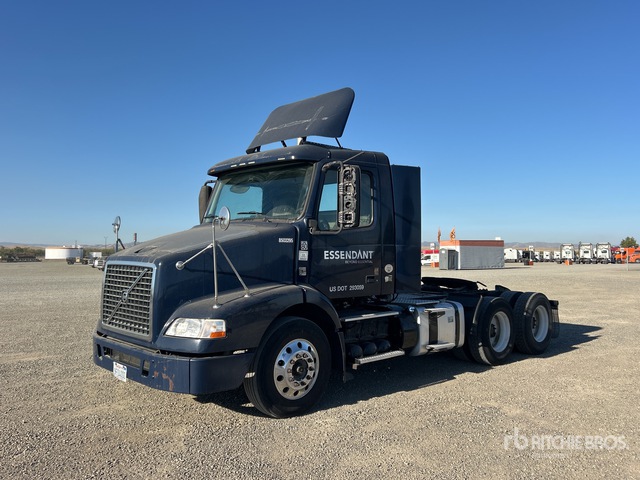 2014 Volvo VNM T/A Day Cab Truck Tractor
Hay bale pricing and sourcing

Hay prices are driven by regional drought, crop type, quality grade, and distance from production areas. Prices below reflect typical North American market ranges and will vary by season and location.
How much does a bale of hay cost?
Small square bales of grass hay retail for roughly $5–$12 per bale at the farm gate, with premium horse-quality alfalfa bales reaching $15–$25 or higher in dry years. Large square bales are generally sold by the tonne rather than by the bale, which makes per-unit comparison easier for commercial buyers.
How much does a round bale of hay cost?
A 5×6 ft round bale of mixed grass hay typically sells for $60–$120 in normal growing years. Alfalfa round bales range from $100–$180 per bale depending on cutting number and tested protein content. During drought years, premium round bales in affected regions can exceed $200. Net-wrapped bales command a slight premium over twine-only bales due to better storage integrity.
Where can you buy hay bales?
Hay bales can be sourced directly from local producers, through agricultural co-ops, at feed stores, and via online agricultural marketplaces. For producers looking to buy or sell baling equipment rather than the hay itself, Ritchie Bros. auctions hay and baling equipment regularly through both live and online channels — useful when upgrading to a larger baler type or liquidating equipment after a harvest season.
Baling productivity for farm planning
Understanding yield per acre helps you size baler capacity correctly and plan storage before the season starts.
How many bales of hay per acre?
Yield depends on crop type, soil fertility, irrigation, cutting number, and regional climate. As a working benchmark:
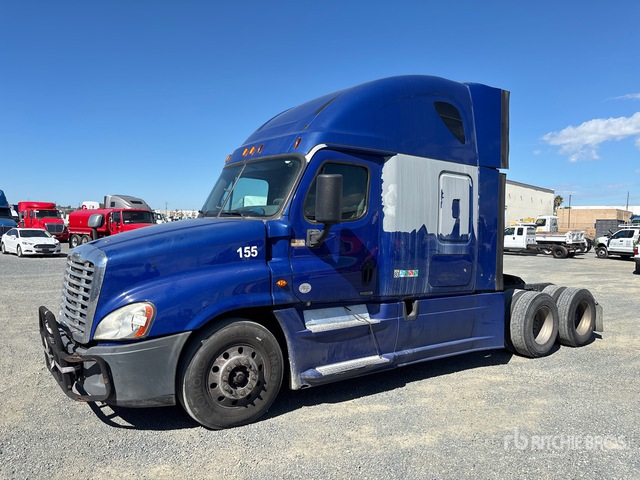 2017 Freightliner Cascadia 125 T/A Sleeper Truck Tractor
- Grass hay (dryland): 1–3 small square bales per cutting, or 0.5–1.5 round bales per acre
- Grass hay (irrigated): 4–7 small square bales per cutting, or 1.5–3 round bales per acre
- Alfalfa (irrigated, 4–5 cuts/year): 6–10 small square bales per cutting, or 2–4 round bales per acre per cut
For annual planning, multiply your per-cutting yield by the number of cuts expected in your region. A 200-acre irrigated alfalfa operation averaging three round bales per acre per cut across four cuts produces roughly 2,400 round bales per season — a figure that drives decisions about baler throughput, twine and net wrap inventory, and covered storage capacity.
Matching your baler type to actual yield and handling capacity is where productive operations separate from costly ones. A high-throughput large square baler on a 100-acre dryland grass operation is expensive overcapacity. A small square baler feeding a 500-head feedlot is a labour bottleneck. Get the fit right before the machine leaves the auction yard.
Whether you’re replacing aging equipment after a hard season or scaling up for a larger operation, buying a used baler through auction is one of the most cost-effective ways to add baling capacity. Ritchie Bros. lists round balers, small and large square balers, and combination baler-wrappers from major manufacturers — including John Deere, New Holland, Vermeer, Massey Ferguson, and Claas — across its live and online auction platforms year-round.
 |
The most reliable trucks you can buy used |
 2017 Volvo VNM T/A Day Cab Truck Tractor2014 Volvo VNM T/A Day Cab Truck Tractor2017 Freightliner Cascadia 125 T/A Sleeper Truck Tractor
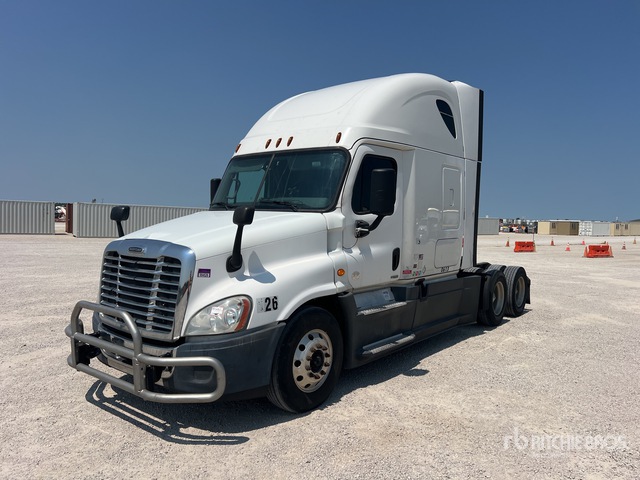 2017 Freightliner Cascadia 125 T/A Sleeper Truck Tractor
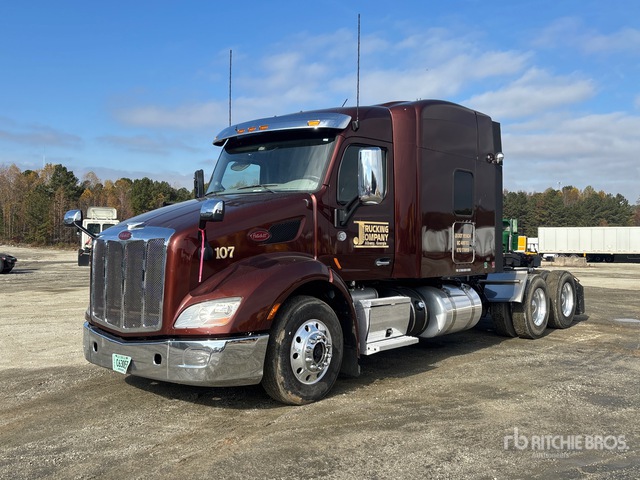 2020 Peterbilt 579 T/A Sleeper Truck Tractor
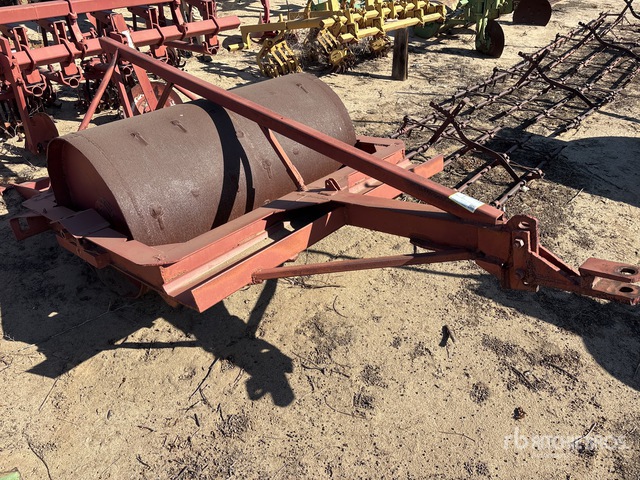 Misc. Ag attachment
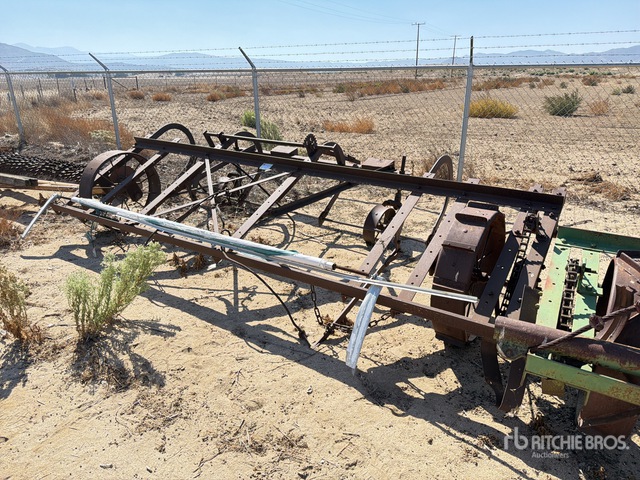 Misc. Ag attachment
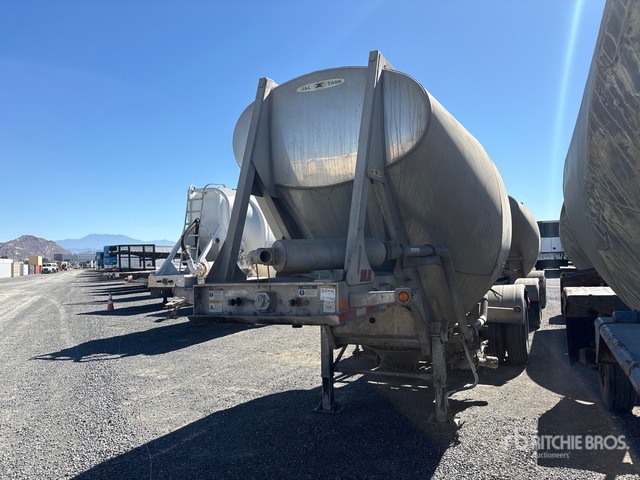 2020 J & L Pneumatic Bulk Trailer
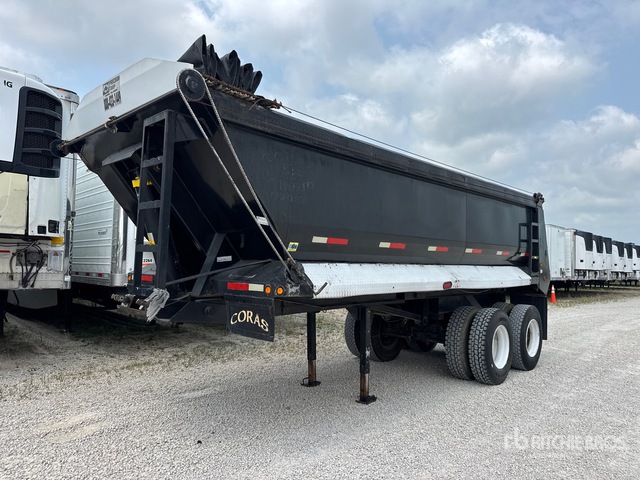 2010 Cora's Welding Predator End Dump Trailer
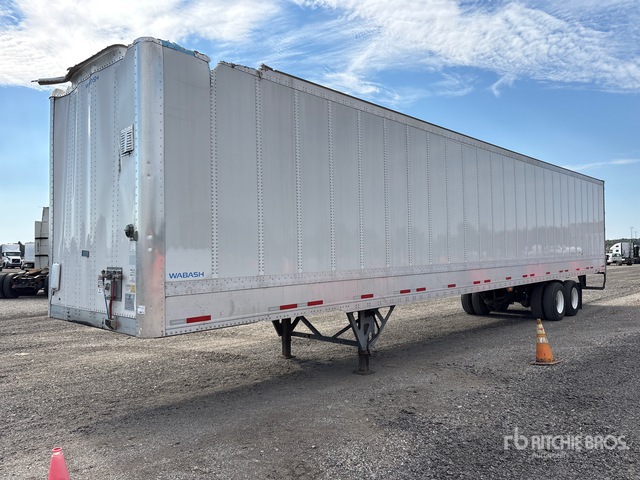 2024 Wabash DVHDHPC Van Trailer
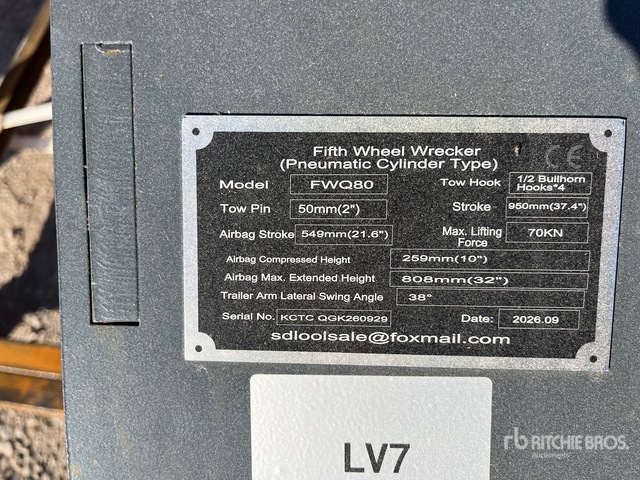 2026 GIYI GY-FWQ80 Fifth Wheel Wrecker Attachment
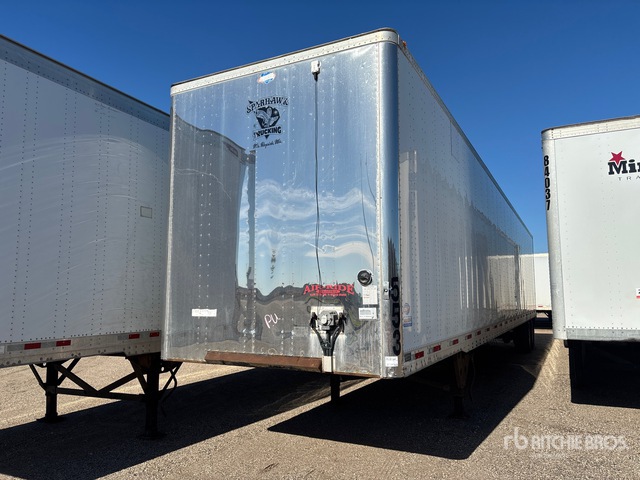 2013 Utility VS2DX Van Trailer
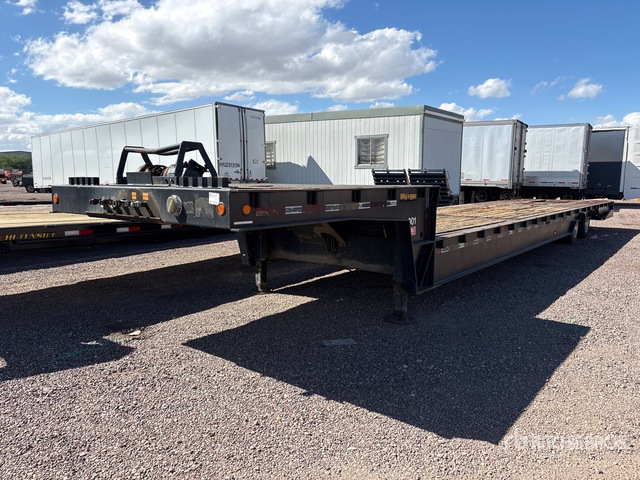 2007 Ledwell Hydraulic Tail Trailer
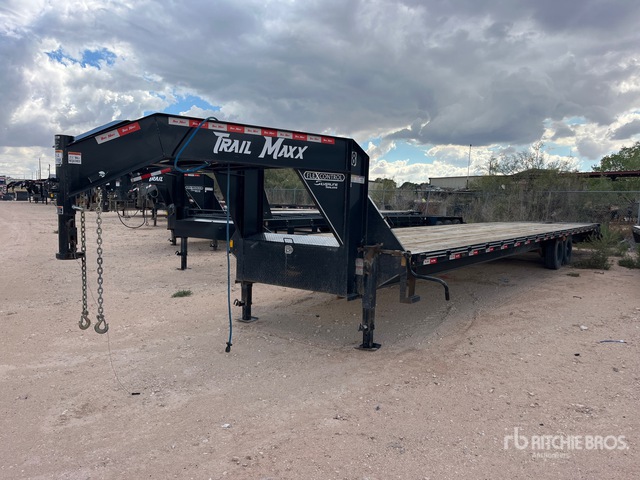 2025 Trailmaxx Equipment Trailer
 Leer ROLLITUP Misc. Truck Attachments
 Leer ROLLITUP Misc. Truck Attachments
 2009 GMC C7500 Cab and Chassis
 2007 Ford F-650 S/A Dump Truck
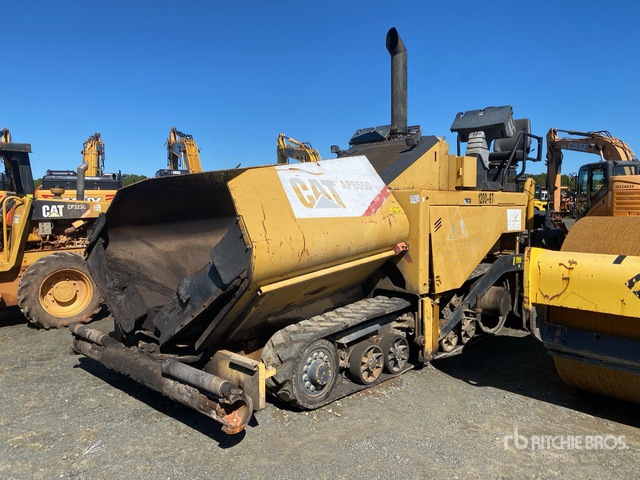 2007 Cat AP655D Asphalt Paver
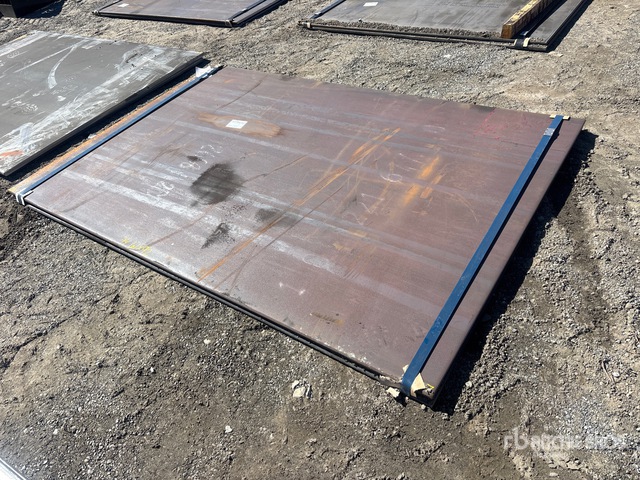 2026 Kit Containers Steel Plates
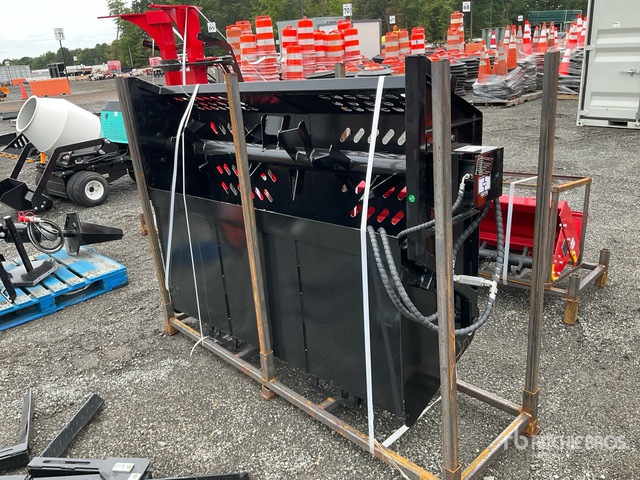 2026 GIYI GY-RR78 Misc. Skid Steer Attachment
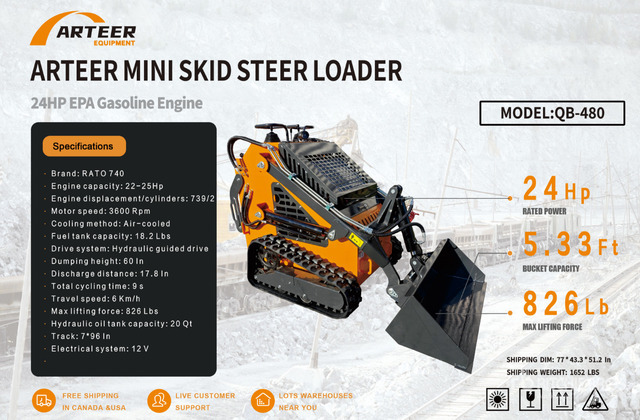 2026 ARTEER QB-480 Compact Track Loader
 2026 ET13-RED Trike
 2018 Skyjack 3219 Scissor Lift
 2024 Exmark Turf Tracer X-Series Lawn Mower