 USA/CAN
 France
  Germany
  United Kingdom
  Netherlands
  Spain
Spain  Italy
Italy  Canada (FR)
  Mexico
  Australia
 Dump truck hauling capacity: how to match it to your excavator


Getting the excavator-to-dump-truck ratio wrong is one of the most expensive mistakes on a dig site. Too small a truck and your excavator sits idle waiting for the next pass. Too large and you’re burning fuel hauling a half-empty load. Matching dump truck hauling capacity to excavator payload is the single biggest lever fleet managers and contractors have for cutting cycle times and reducing cost per tonne moved.
This guide gives you a practical sizing framework — with real numbers — so you can spec the right combination before you buy.
Why the excavator-dump truck ratio matters
Mismatched equipment creates a ripple effect through your entire operation. An undersized truck forces your excavator to pause between loads, which means the machine that typically represents the highest hourly cost on site is sitting still. Oversized trucks cause the opposite problem: the excavator has to make extra passes to fill the bed, extending each cycle and reducing overall throughput.
The industry benchmark most earthmoving contractors work toward is 3–5 excavator passes to fill a dump truck. This range keeps the truck moving without leaving the excavator waiting, and it gives the operator a realistic rhythm that holds up across a full shift.
How to calculate excavator payload per bucket
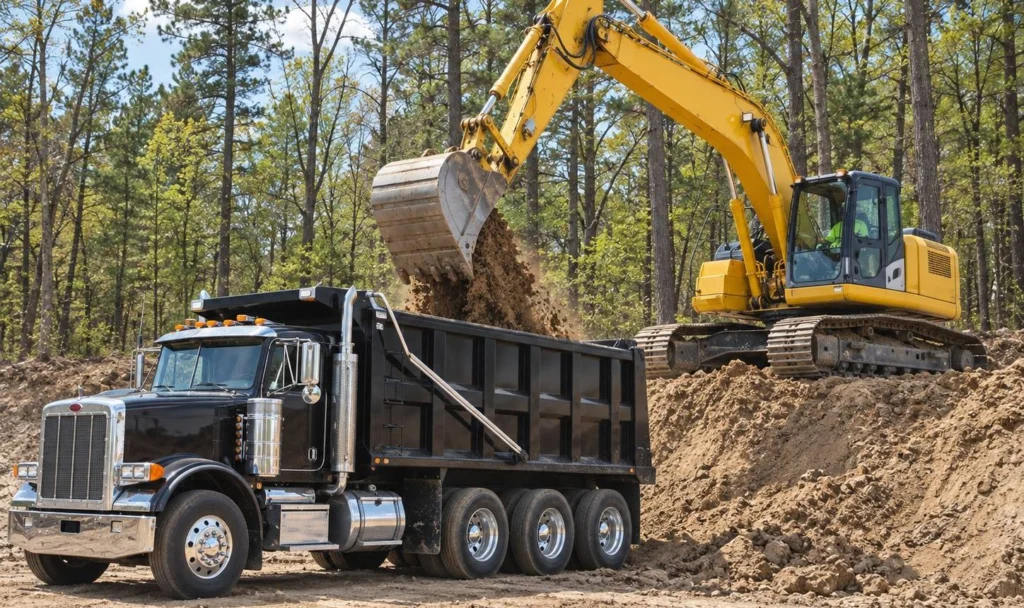
Excavator load capacity is determined by bucket size and material density — not just the machine’s rated lift capacity.
The formula is straightforward:
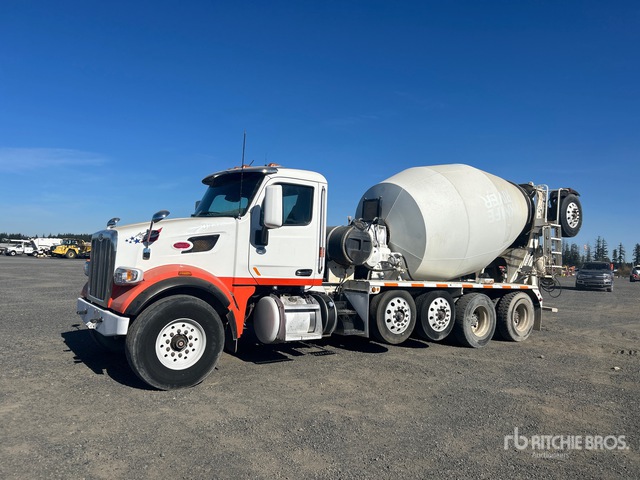 2017 Peterbilt 567 Mixer Truck
Payload per pass (tonnes) = Bucket capacity (m³) × Material density (t/m³) × Fill factor
Common material densities: – Loose topsoil: 1.1–1.3 t/m³ – Compacted clay: 1.6–1.8 t/m³ – Wet sand: 1.8–2.0 t/m³ – Crushed rock/gravel: 1.5–1.7 t/m³ – Blasted rock: 1.7–2.0 t/m³
Fill factors range from 0.85 for sticky clay (material clings, reducing effective volume) to 1.1 for loose, free-flowing materials that heap above the bucket lip.
Example calculation
A mid-size 20-tonne excavator with a 1.0 m³ bucket digging compacted clay (1.7 t/m³) at a 0.90 fill factor moves approximately 1.53 tonnes per pass.
At 4 passes to fill a truck, you need a truck with a ~6-tonne payload capacity — which corresponds roughly to a light-duty or single-axle dump truck.
Scale that up to a 50-tonne excavator with a 2.5 m³ bucket in blasted rock (1.9 t/m³, fill factor 0.95): each pass moves around 4.5 tonnes. At 4 passes, you need a truck capable of ~18 tonnes — a tandem or tri-axle is the right tool.
 2004 Hyundai V12530152-AJS Van Trailer
Matching excavator size to dump truck class
The table below covers the most common pairings across excavator weight classes.
| Excavator size | Bucket capacity | Passes to fill | Recommended truck class | Typical payload |
|---|---|---|---|---|
| Mini (1–6 t) | 0.03–0.15 m³ | 4–5 | Light-duty / trailer | 1–3 t |
| Small (6–10 t) | 0.15–0.40 m³ | 4–5 | Light-duty dump truck | 3–6 t |
| Mid-size (10–25 t) | 0.40–1.20 m³ | 3–5 | Single or tandem axle | 6–14 t |
| Large (25–50 t) | 1.20–2.80 m³ | 3–4 | Tandem or tri-axle | 14–22 t |
| Mining class (50 t+) | 2.80 m³+ | 3–4 | Quad/five-axle or articulated | 22–40 t+ |
For large-scale earthmoving and quarry work where haul roads are controlled and off-highway, articulated dump trucks are often the preferred match for mining-class excavators — their articulated chassis handles rough terrain without the payload penalties of rigid trucks working off-road.
What happens when you get the ratio wrong
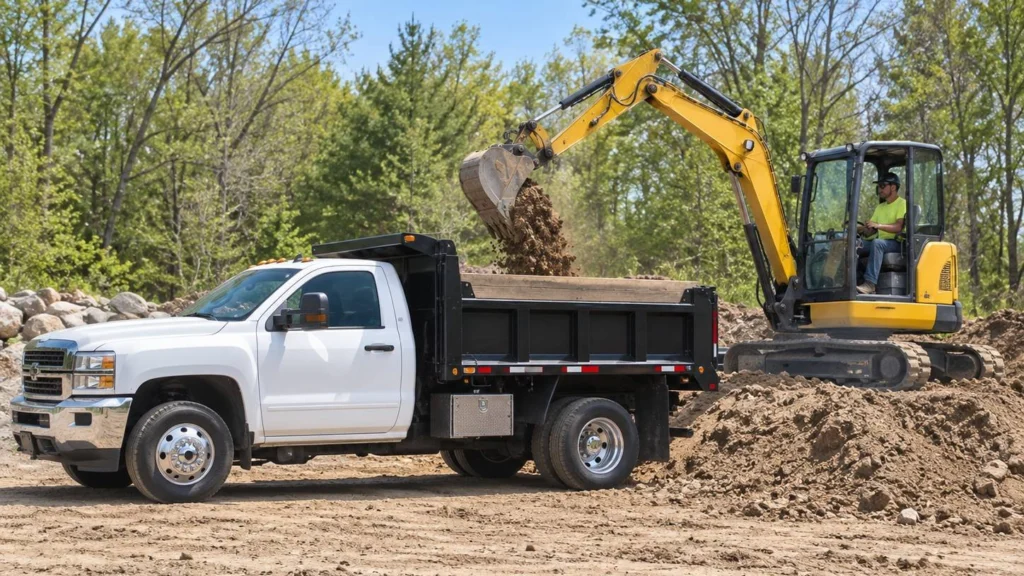
Too few passes (truck undersized)
If your excavator fills a truck in 1–2 passes, trucks are cycling faster than they can queue, load, haul, tip, and return. You’ll need significantly more trucks to keep the excavator productive, which rarely makes economic sense unless haul distances are very long.
Too many passes (truck oversized)
At 6+ passes to fill, the truck sits parked on site waiting. Every minute of truck idle time is wasted payload capacity. For a tandem axle dump truck running at $120–180/hour, idle time adds up fast.
The 3–5 pass rule in practice
Most experienced site managers build their fleet ratios around this rule and then adjust for haul distance. Longer haul distances (1 km+) require more trucks per excavator to maintain continuous digging. Shorter distances (sub-300 m) can tolerate fewer trucks with tighter cycle times.
Haul distance and how it shifts the equation
Payload matching is only half the picture. Haul cycle time — the time from loading to tipping and returning — determines how many trucks you need per excavator.
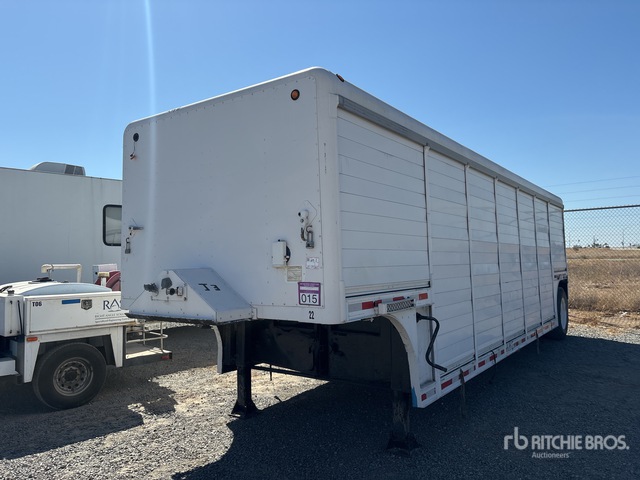 1995 HACKN Beverage Trailer
A rough guide: – Under 300 m haul: 2–3 trucks per excavator – 300 m – 1 km haul: 3–5 trucks per excavator – 1 km+ haul: 5+ trucks, or switch to larger payload trucks to reduce trip frequency
For long-haul applications, tri-axle dump trucks offer a practical middle ground — higher payload than a tandem without the complexity of a five-axle configuration, and legal on most state/provincial highway networks.
Key specs to check when buying a used dump truck for a specific excavator
If you’re sourcing at auction, the listing details matter. Look for:
- Gross Vehicle Weight Rating (GVWR) vs. payload: Payload = GVWR minus curb weight. Don’t assume payload from truck size alone — body weight varies significantly.
- Body type and volume: A 16-tonne payload truck with a 10 m³ body won’t carry a full payload of dense material — it’ll be volume-limited before it’s weight-limited. Confirm body cubic capacity against your material density.
- Body construction: Steel versus aluminium bodies affect tare weight meaningfully. An aluminium body can add 1–2 tonnes of effective payload compared to a comparable steel body.
- Axle configuration: More axles distribute weight and allow higher legal payloads on public roads. Confirm local axle weight limits before finalising your purchase.
- Tailgate and ejector options: For sticky material like clay, ejector bodies or hydraulic tailgates reduce unloading time and keep cycle times tight.
Common excavator-dump truck combos that work
These combinations are proven across earthmoving, construction, and quarry applications:
- Cat 320 (20 t excavator) + single-axle dump truck: Compact urban sites, utility work, tight access
- Komatsu PC360 (36 t excavator) + tandem axle: Road building, commercial earthworks
- Cat 390 / Liebherr R 946 (90 t+ excavator) + articulated or five-axle dump: Quarry benching, large-scale cut and fill
- Volvo EC480 (48 t excavator) + tri-axle: Infrastructure projects, highway construction, pipeline
Buying the right combo at auction
When you’re sourcing a dump truck with excavator as a matched pair — or building a fleet combination — the key is buying to your site’s material type and haul distance first, then filtering by payload class. Purchasing an oversized truck because it looked like value often costs more in operating inefficiency than you save on the purchase price.
Ritchie Bros. regularly lists a wide range of dump truck configurations, from light-duty through to heavy quarry-spec units. Filter by axle configuration and payload to find equipment matched to your excavator class.
 Leer HF350M Misc. Truck Attachments
Bottom line: The 3–5 pass rule is your anchor. Calculate your excavator’s payload per pass using bucket size, material density, and fill factor — then select the truck class that gets filled in that range. Get the ratio right at the purchase stage and the productivity gains compound across every hour your fleet is running.
 |
Tips for cross-border buyers at Ritchie Bros. auctions |
 2017 Peterbilt 567 Mixer Truck2004 Hyundai V12530152-AJS Van Trailer1995 HACKN Beverage TrailerLeer HF350M Misc. Truck Attachments
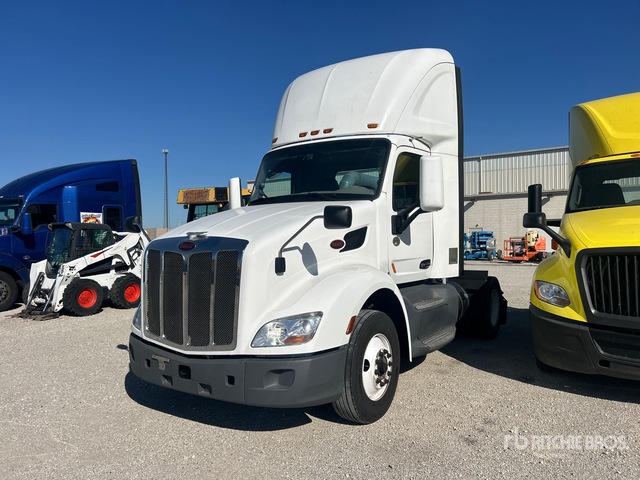 2020 Peterbilt 579 S/A Day Cab Truck Tractor
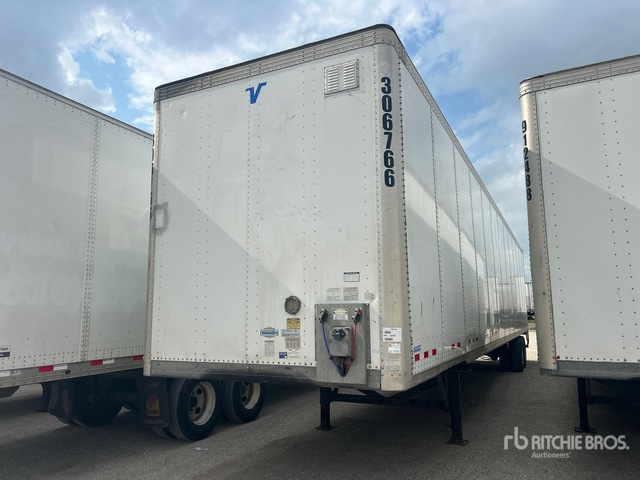 2023 Vanguard VXP Van Trailer
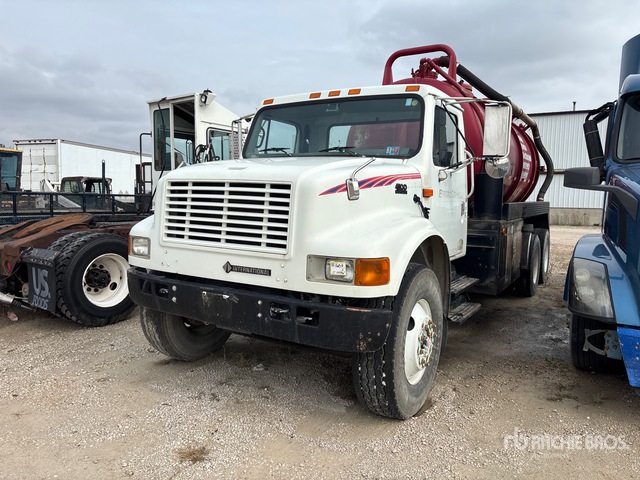 2001 International 4900 Vacuum Tanker Truck
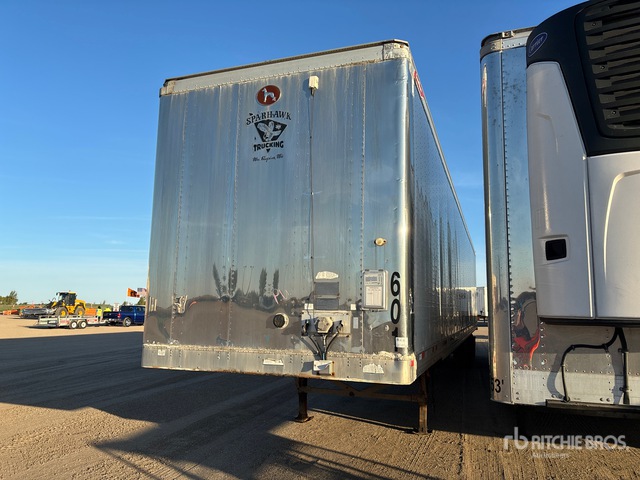 2015 Great Dane CS1-1314-01053 Van Trailer
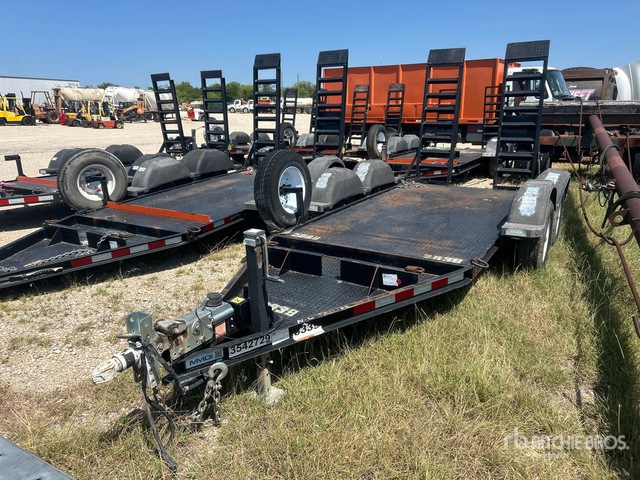 2020 MMDI 510RCMPH Equipment Trailer
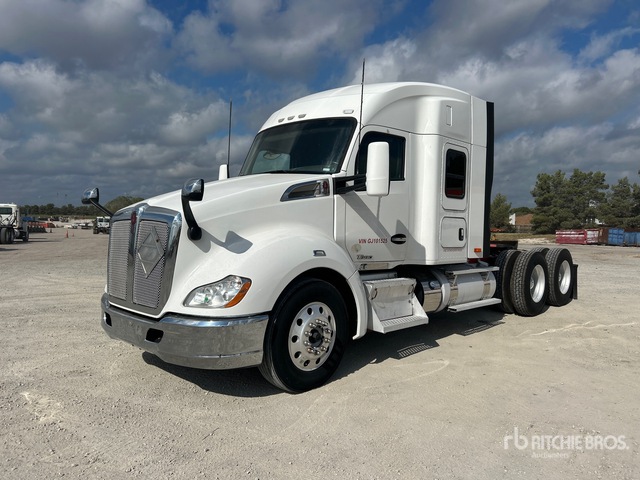 2016 Kenworth T680 T/A Sleeper Truck Tractor
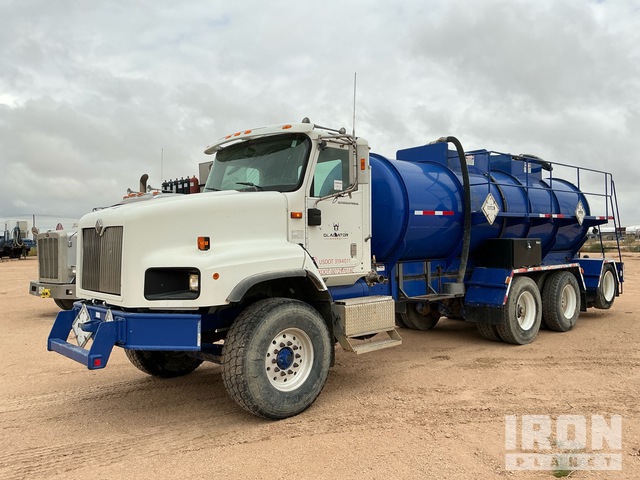 2006 International 5600I Tanker Truck
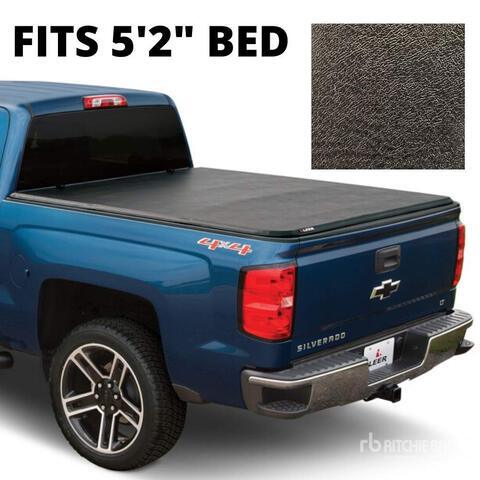 Leer Latitude Misc. Truck Attachments
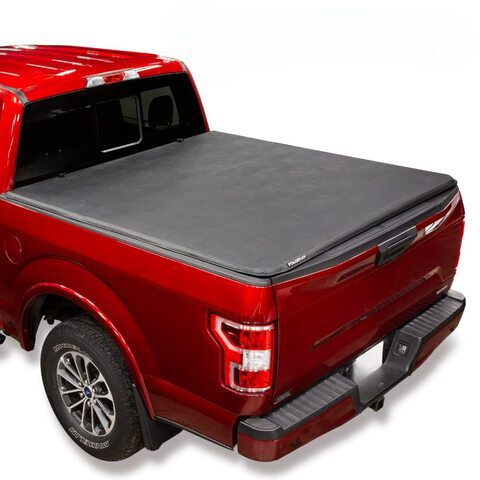 Leer FOLDITUP Misc. Truck Attachments
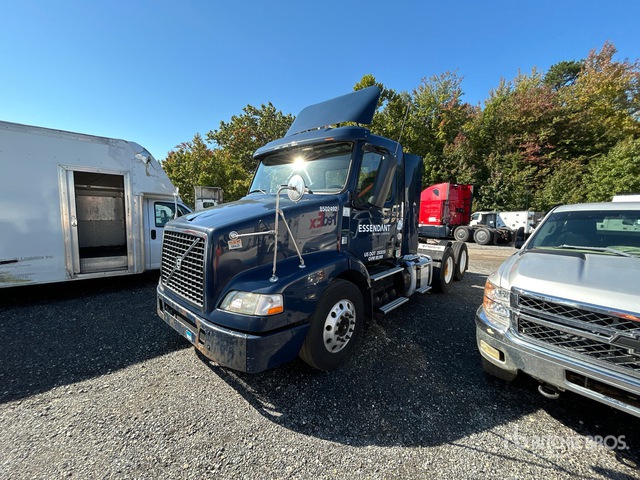 2014 Volvo VNM200 T/A Day Cab Truck Tractor
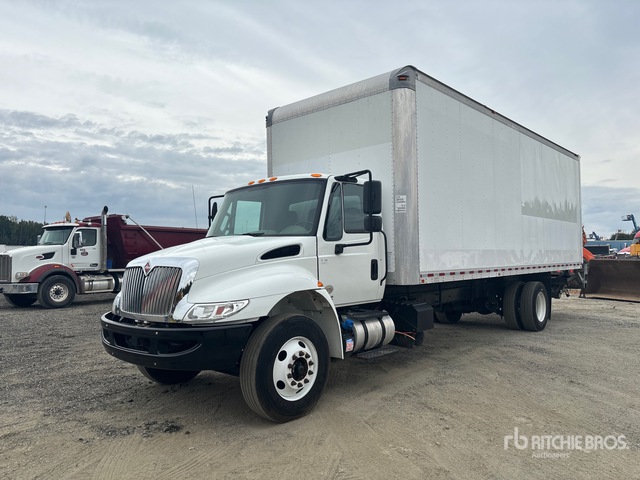 2019 International 4300 Van Truck
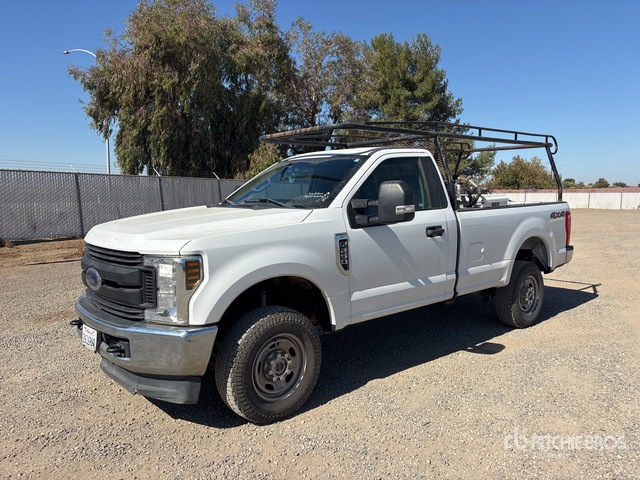 2019 Ford F-250 Pickup
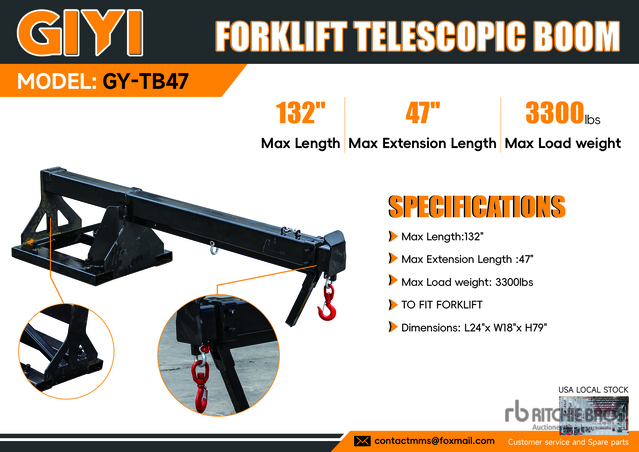 2026 GIYI GY-TB47 Misc. Lift Truck Attachment
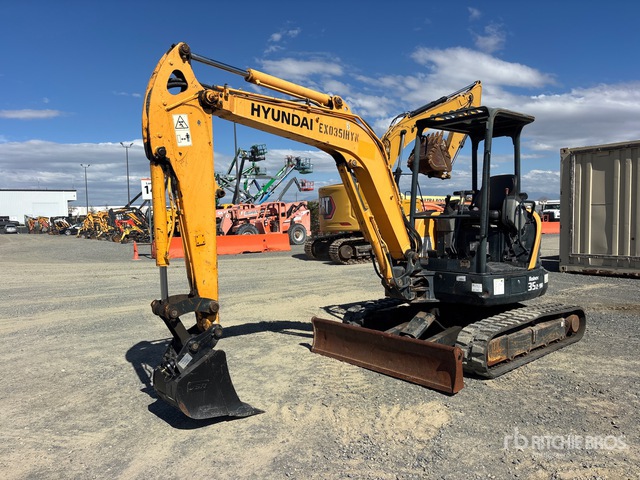 Hyundai Robex 35Z-9A Mini Excavator: <6.6t
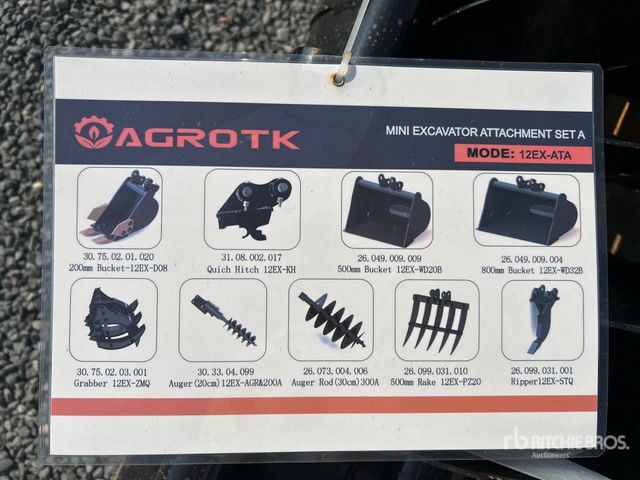 2026 AGT 12EX-ATA Misc. Excavator Attachment
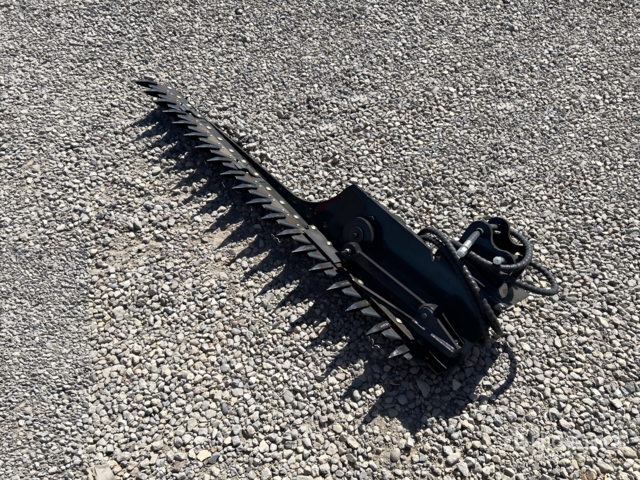 2026 Miva VCHTM Misc. Excavator Attachment
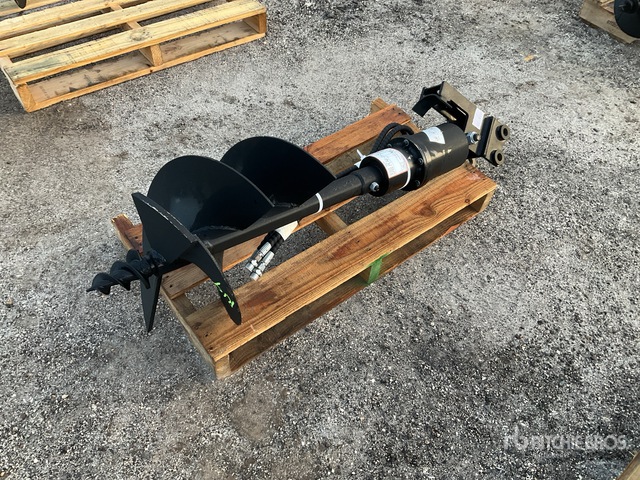 2026 VICSEC VCAG400 Excavator Auger
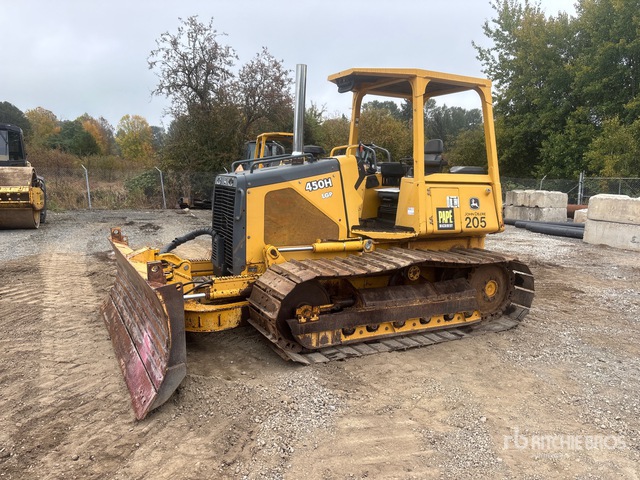 2004 John Deere 450H LGP Crawler Dozer
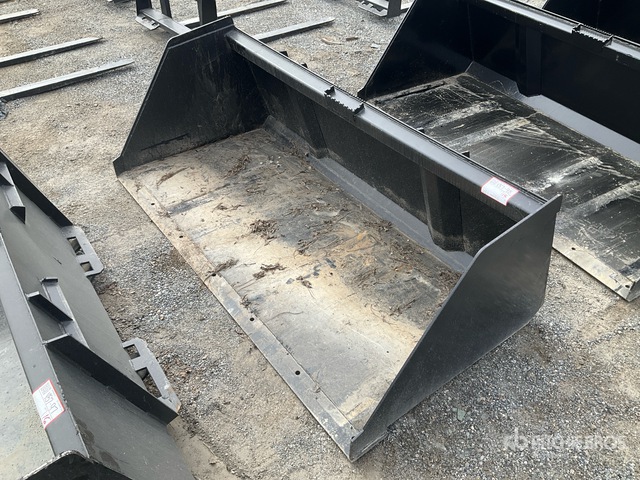 All-Star Skid Steer Bucket
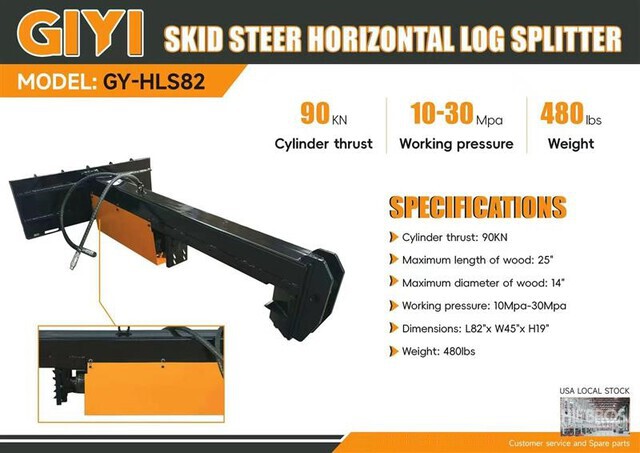 2026 GIYI GY-HLS82 Skid Steer Log Splitter
 2013 Skyjack SJIII-3219 Scissor Lift