 USA/CAN
 France
  Germany
  United Kingdom
  Netherlands
  Spain
Spain  Italy
Italy  Canada (FR)
  Mexico
  Australia
 Mobile crane inspection checklist for used crane buyers

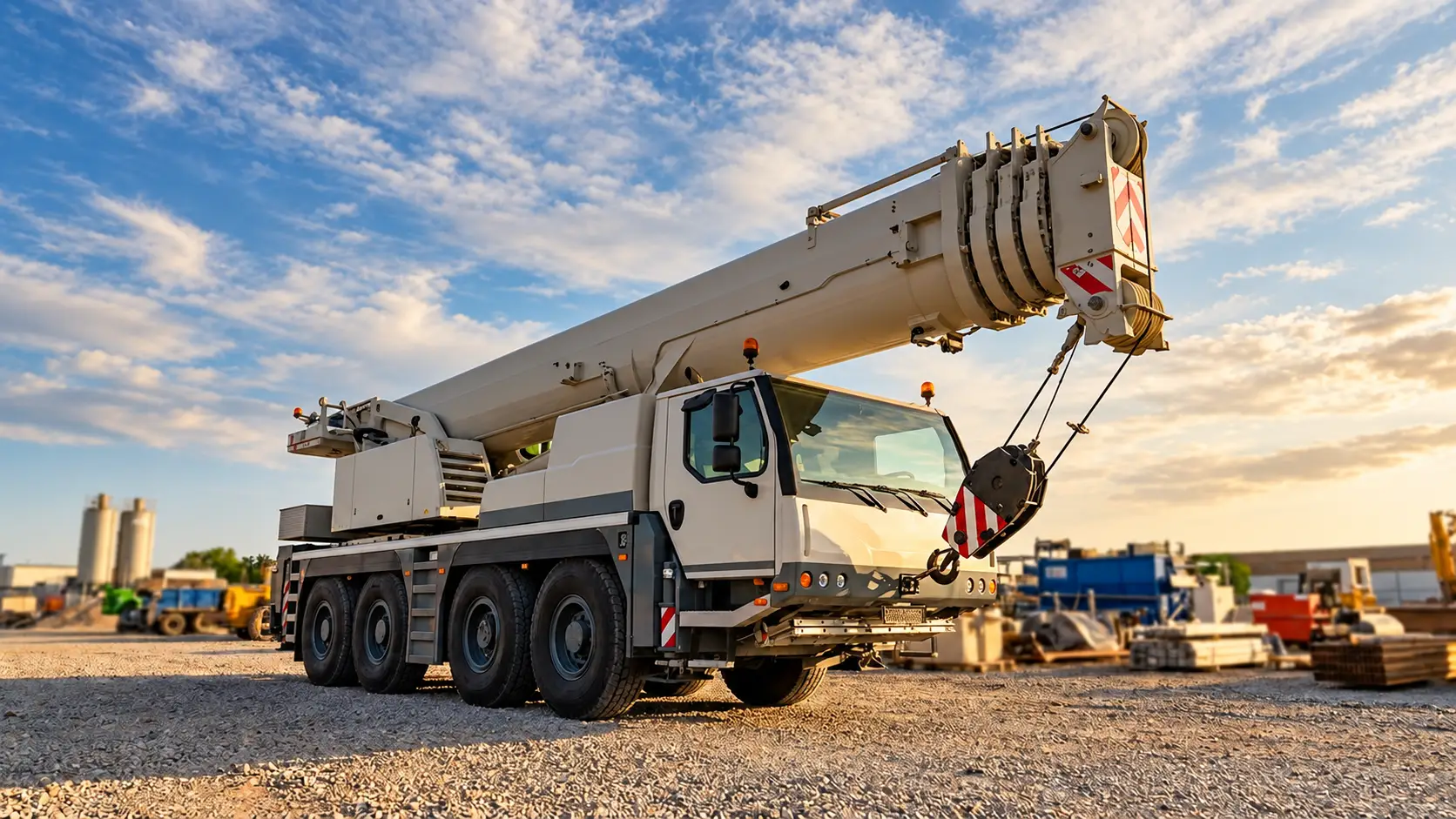
A mobile crane inspection checks the crane’s structure, wire rope, hooks, hydraulics, safety devices and carrier, and confirms that the inspection records are complete. In the U.S., OSHA’s construction standard for cranes (29 CFR 1926.1412) requires a visual inspection every shift, a documented inspection every month and a comprehensive inspection by a qualified person at least every 12 months.
If you are buying a used mobile crane, those records are your first checkpoint. A crane with a recent annual inspection, a clean service history and a walkaround that matches the paperwork is a far safer purchase than one that simply looks good in photos. This guide covers the inspection types and frequencies, who is allowed to perform them and a complete checklist for inspecting a used mobile crane before you buy.
What does a mobile crane inspection include?
A mobile crane inspection covers the boom and structure, wire rope, hooks and sheaves, hydraulic system, safety devices, outriggers and the carrier the crane rides on.
On a daily or shift inspection, that means a visual check of controls, hydraulic lines and fluid levels, hooks and latches, wire rope, tires, ground conditions and safety devices. An annual or comprehensive inspection goes much deeper, covering structural integrity, sheaves and drums, pins and bearings, brakes, the power plant, cylinders, valves, outrigger pads, electrical components and warning labels.
Get free pricing for recently sold cranes
Create a free account to access real sold pricing information from recent auctions.
Reveal sold price- Real auction data
- Verified sales
- Updated daily
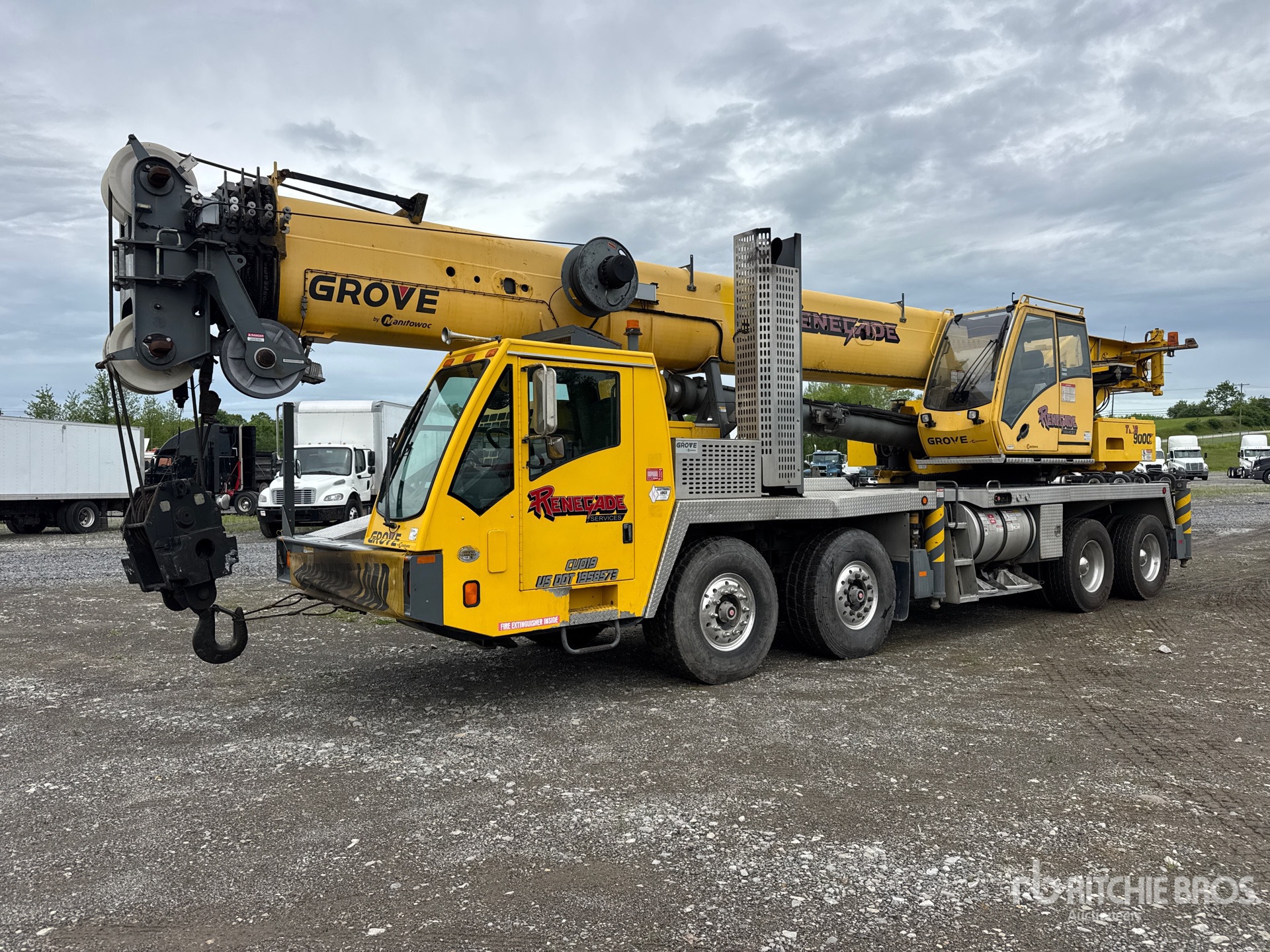
2013 Grove TMS9000E 110 ton 8x4x4 Hydraulic Truck Crane
Pittsburghn, PA ยท 26,636 mi
 2024 John Deere 135 P-Tier Tracked Excavator
Sold
๐Ÿ”’ $X,XXX USD Reveal sold price >
Closed: Jun 23, 2026
How often do cranes need to be inspected?
Under OSHA 1926.1412, mobile cranes used in construction must be inspected every shift, every month and at least once every 12 months, plus after repairs, modifications or long idle periods.
| Inspection | When | Who performs it | Records |
|---|---|---|---|
| Shift | Before or during each shift | Competent person | Not required |
| Monthly | Each month the crane is in service | Competent person | Keep at least 3 months |
| Annual (comprehensive) | At least every 12 months | Qualified person | Keep at least 12 months |
| Repaired or adjusted | Before returning to use | Qualified person | See 1926.1412 |
| Modified | Before initial use | Qualified person | See 1926.1412 |
| Idle 3 months or more | Before returning to use | Qualified person | See 1926.1412 |
The ASME B30.5 standard for mobile cranes uses similar language, grouping inspections into frequent inspections, done daily to monthly, and periodic inspections, done at intervals of one to 12 months depending on how hard the crane works. Some states and cities also require annual third-party certification, so check the rules where the crane will operate.
Who should inspect a crane?
A competent person can perform shift and monthly crane inspections, but the annual inspection and any inspection after repairs or modifications must be done by a qualified person.
 1993 International 4700 Asphalt Distributor Truck
OSHA defines a competent person as someone who can identify existing and predictable hazards and has the authority to correct them. A qualified person holds a recognized degree, certificate or professional standing, or has extensive knowledge, training and experience that proves they can solve problems related to the work. For a used crane purchase, the safest move is to hire an independent, certified crane inspector with experience on the specific make and type you are buying.
Used mobile crane inspection checklist
Use this crane inspection checklist on any used all-terrain, rough-terrain, truck or crawler crane. It does not replace an inspection by a qualified person, but it will tell you quickly whether a crane is worth a closer look.
1. Paperwork and records
Ask for the most recent annual inspection report, monthly inspection records, service and repair history, and the load charts and operator’s manual for the crane’s exact configuration. Many mobile cranes track upper and carrier hours separately, so record both. Gaps in the paperwork are a reason to slow down, not a reason to walk away, but they should be reflected in what you are willing to pay.
2. Boom and jib
Sight down the boom for straightness and look for dents, cracks at the welds and heat discoloration from repairs. Check wear pads between boom sections, boom pins and retainers, and the telescoping cylinder. On lattice booms, inspect every chord and lacing member, because a single bent lacing can reduce capacity.
3. Wire rope
Run the full length of the hoist rope where you can. Look for broken wires, kinks, crushing, birdcaging, corrosion and any visible reduction in diameter. Check that the rope spools evenly on the drum and that the end connections are secure.
4. Hook and block
Inspect the hook for cracks, twisting and a stretched throat opening, and confirm the safety latch closes fully. Spin the block’s sheaves and swivel and listen for rough bearings.
 2004 Transcraft Flatbed Trailer
5. Sheaves and drums
Look for worn or chipped sheave grooves, cracked flanges and wobbling sheaves. Worn grooves destroy wire rope quickly, so sheave condition affects future operating costs as much as safety.
6. Swing bearing and turntable
Check the turntable bolts and watch for rocking or movement in the swing bearing as the boom is raised and lowered. Listen for grinding while the upper swings through a full rotation.
7. Outriggers
Extend and retract every outrigger beam and jack. Look for cracked welds, bent beams, leaking cylinders and jacks that drift after they are set. Confirm the outrigger pads are present and undamaged.
8. Hydraulic system
Look for leaks at hoses, fittings, cylinders and the pump. Watch for boom or outrigger cylinders that creep under load, and listen for a noisy or cavitating pump.
9. Safety devices
Confirm the load moment indicator or rated capacity indicator powers up and responds as the boom moves, and test the anti-two-block system, boom angle indicator, level indicator, horn, lights and backup alarm. A crane with disabled or faulty safety devices should not work until they are repaired.
10. Carrier, cab and controls
Inspect the carrier like any heavy truck: engine, transmission, axles, steering, brakes, tires and frame. In the cab, check that every control returns to neutral, the gauges work and the windows give a clear view. Finish with a full function test, and if the price justifies it, ask a qualified person to run a load test.
 2018 Wabash RFALHSA Refrigerated Trailer
What should you know about buying a used crane at auction?
When you buy a used crane at auction, review the inspection report and records in the listing, attend the preview in person or send an inspector, and budget for any repairs the inspection turns up.
Ritchie Bros. regularly sells all-terrain cranes, rough-terrain cranes, truck cranes and crawler cranes, with photos, equipment details and, on many items, inspection reports. For an extra layer of confidence, Ritchie Bros. inspection services can provide a detailed look at equipment before you bid. If you are staffing up for new crane work, our look at crane operator salaries covers what to budget for the people who run them.
The bottom line
A thorough mobile crane inspection starts with the records and ends with a function test. Confirm the annual inspection is current, work through the boom, wire rope, hooks, outriggers, hydraulics and safety devices, and bring in a qualified inspector before you commit to any used crane. The time you spend inspecting is small compared to the cost of buying a crane that cannot pass its next annual.
 |
How to choose a skid steer snow pusher for your machine |
 2024 John Deere 135 P-Tier Tracked Excavator2004 Transcraft Flatbed Trailer1993 International 4700 Asphalt Distributor Truck2018 Wabash RFALHSA Refrigerated Trailer
 2019 Ram ProMaster 1500 Cargo Van
 2015 Kenworth T800 T/A Day Cab Truck Tractor
 2020 Demco Car Carrier Trailer
 2010 Volvo VNL T/A Sleeper Truck Tractor
 2022 Freightliner Cascadia 126 T/A Sleeper Truck Tractor
 2017 International 4300 Van Truck
 2024 Peterbilt 579 T/A Sleeper Truck Tractor
 2017 Freightliner Cascadia 113 S/A Day Cab Truck Tractor
 2019 Ford Transit 350 Cargo Van
 1983 PJ Flatbed Trailer
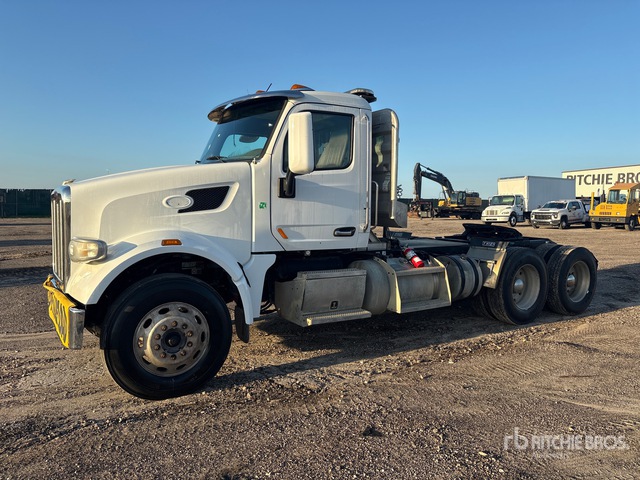 2017 Peterbilt 567 T/A Day Cab Truck Tractor
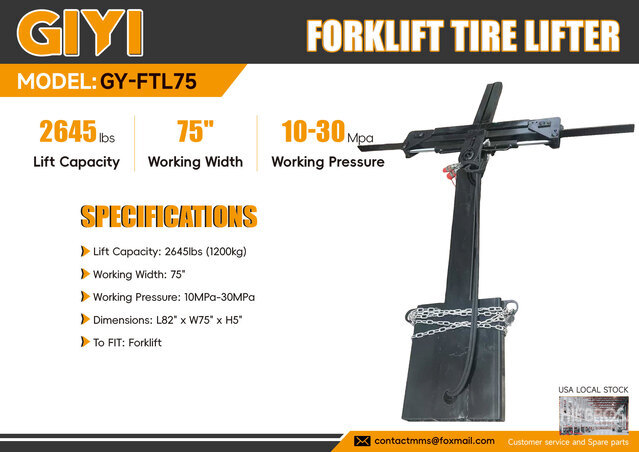 2026 GIYI GY-FTL75 Misc. Lift Truck Attachment
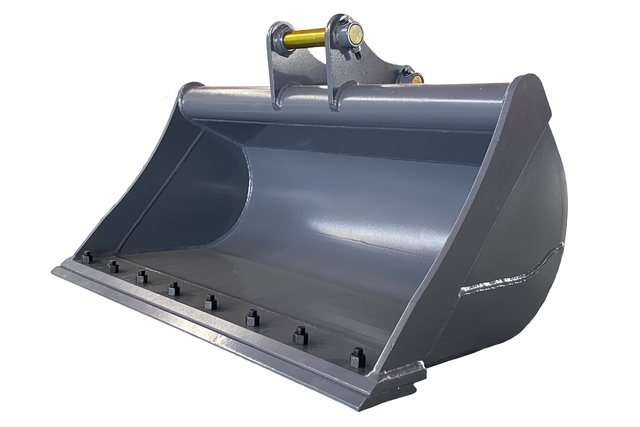 2026 Warrior WBMCC5-1220 Excavator Bucket
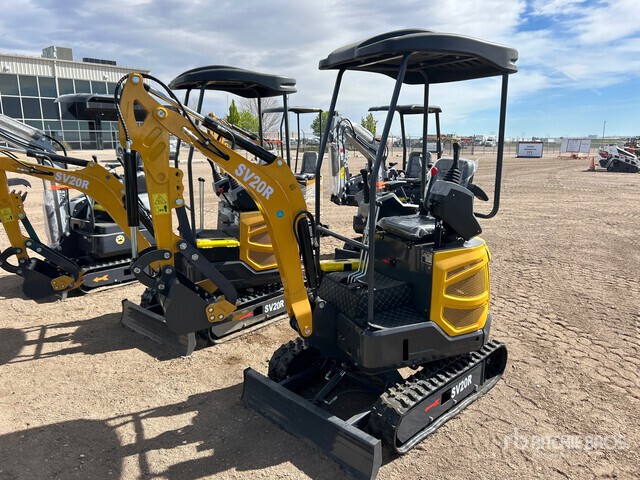 2026 STARVOX SV20R Mini Excavator: <6.6t
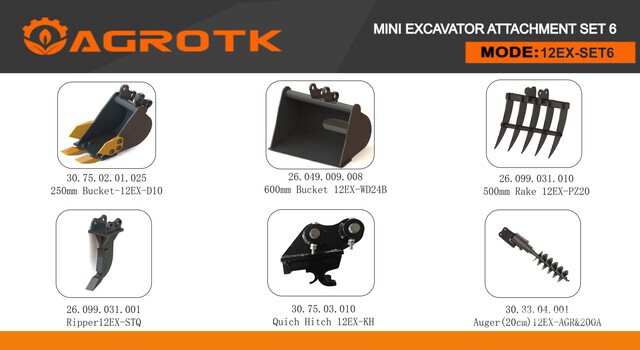 2026 AGT 12EX-SET6 Misc. Excavator Attachment
 2026 Warrior WBRC12-1620-1 Excavator Rake
 2026 Warrior WBMCS20-025 Excavator Bucket
 2024 JCB 3TS-8T Compact Track Loader
 2008 ABI HVR 75 Pile Driver and Extractor
 Vevor KW-870D Misc. Consumer Electronics
 2026 Kit Containers QT-SP-10-23-SB Skid Steer Snow Pusher