 USA/CAN
 France
  Germany
  United Kingdom
  Netherlands
  Spain
Spain  Italy
Italy  Canada (FR)
  Mexico
  Australia
 Tesla Semi truck price and differences vs. traditional diesel

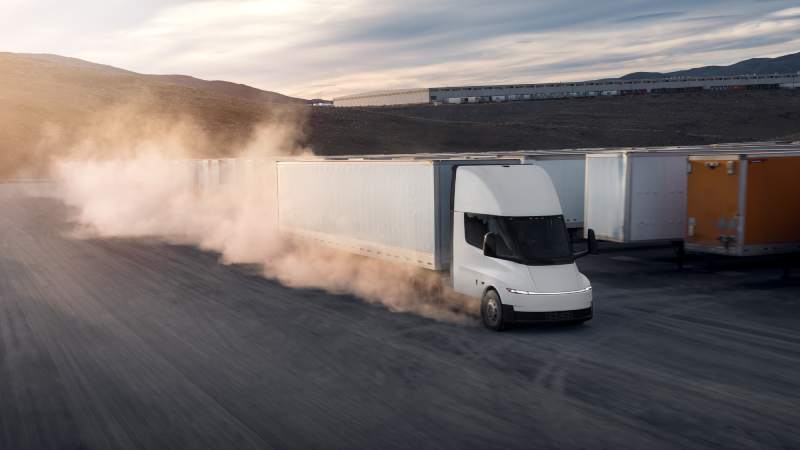
The Tesla Semi has moved from concept to commercial reality, with PepsiCo and a handful of other early adopters already running them. For fleet operators and equipment buyers evaluating their next truck purchase, the core question is straightforward: does the Tesla Semi’s higher upfront price translate into lower total cost of ownership — and how does it actually stack up against a conventional diesel Class 8 truck?
Tesla Semi truck price and availability
The Tesla Semi starts at approximately $150,000 for the 300-mile range variant and $180,000 for the 500-mile range variant — roughly two to three times the purchase price of a comparable diesel Class 8 truck.
Tesla began limited production deliveries in December 2022, with PepsiCo receiving the first batch of 100 units. Full-scale production has been slower than originally projected. Tesla has not published a firm mass-production timeline, though the company has indicated plans to ramp output at its Gigafactory Nevada facility through 2025 and beyond.
For buyers asking how much is a Tesla Semi relative to used-market alternatives: as early-adopter fleets eventually cycle units out, used Tesla Semis will begin appearing at auction — though the market is still in its infancy. Buyers interested in today’s available used commercial truck inventory can browse winch trucks, water trucks, and utility trucks currently listed through Ritchie Bros.
Are Tesla Semis on the road? Yes — a small but growing number are operating in commercial freight routes, primarily in California. PepsiCo has publicly reported running Tesla Semis on routes between its Modesto facility and distribution centres, logging over 1 million miles collectively across the fleet as of early 2024.
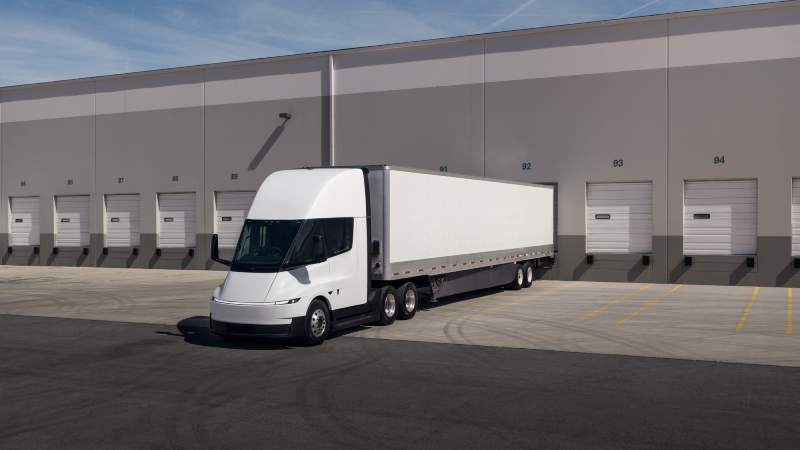
Key differences between Tesla Semi and diesel trucks
Engine and fuel technology comparison
The Tesla Semi uses three independent rear electric motors powered by a lithium-ion battery pack, while a conventional diesel Class 8 truck uses a turbocharged internal combustion engine — typically a 400–600 hp diesel unit from manufacturers like Cummins, Detroit, or PACCAR.
 2019 Ford F-450 Dump Truck: Light Duty
The practical difference goes beyond just powertrain: the Tesla Semi has no transmission, no diesel particulate filter, no DEF system, and no engine oil to change. The drivetrain is fundamentally simpler, which has direct implications for maintenance (covered below).
Diesel trucks remain the dominant platform globally, with a well-established fuelling infrastructure, widely available parts, and decades of technician training behind them. Electric Class 8 trucks are still early-stage in comparison, and charging infrastructure for semis — particularly megawatt-scale charging — is not yet widely deployed outside select corridors.
Performance and acceleration specs
The Tesla Semi outperforms diesel trucks on acceleration — significantly.
Tesla claims 0–60 mph in 20 seconds at 80,000 lb gross vehicle weight (GVW), compared to approximately 60 seconds for a typical diesel Class 8 at the same load. Unloaded, the Semi does 0–60 in under 5 seconds. This performance comes from instant torque delivery across all three motors, which also provides better hill-climbing capability and reduces the need for downshifting on grades.
Top speed is electronically limited to 65 mph (70 mph on some variants), which is in line with governed diesel trucks operated in fleet settings.
Range and charging vs. refueling
The 500-mile variant covers most regional and long-haul day routes, but recharging takes significantly longer than diesel refuelling.
 2019 Utility VS2RA Refrigerated Trailer
With Tesla’s Megacharger (a proprietary 1 MW+ charging system), the Semi can recover approximately 70% charge — roughly 350 miles — in 30 minutes. Diesel fuelling typically takes 10–15 minutes for a full tank providing 1,000–1,500 miles of range, depending on fuel economy and tank capacity.
For fleet operators running hub-and-spoke or depot-return routes, charging overnight at a home base is viable and cost-effective. For over-the-road (OTR) long-haul routes requiring 700+ miles per day, the current charging infrastructure and range limitations make the Tesla Semi a harder fit — at least until the Megacharger network expands substantially.
Operating costs: Tesla Semi vs. diesel trucks
Fuel and energy expenses
This is where the Tesla Semi makes its strongest case — energy costs per mile are materially lower than diesel.
Tesla has cited figures of approximately $0.10–$0.15 per mile in energy costs (at commercial electricity rates), versus $0.35–$0.50 per mile for diesel at current fuel prices. At 100,000 miles per year, that difference is $20,000–$35,000 in annual savings per truck.
Actual savings depend heavily on local electricity rates, whether the operator can charge during off-peak hours, and the cost of installing charging infrastructure. Fleets without existing electrical infrastructure may face $50,000–$200,000+ in site preparation and charger installation costs per depot — a significant upfront capital outlay that must be factored into total cost of ownership calculations.
Maintenance and repair costs
Electric drivetrains have fewer moving parts, and Tesla Semi operators report substantially lower scheduled maintenance costs.
 1974 Kenworth C523 Mixer Truck
There are no oil changes, no transmission services, no DPF regenerations, no DEF refills, and no turbo or injector replacements. Tesla claims maintenance costs of approximately $0.01 per mile versus $0.10–$0.15 per mile for a diesel Class 8 truck. Brake wear is also reduced significantly due to regenerative braking.
The counterpoint: out-of-warranty battery replacement is an unknown long-term cost. Battery degradation over high-mileage commercial use, and eventual pack replacement pricing, are not yet well-established in the market. Diesel repair infrastructure is also vastly more accessible — a broken-down diesel truck can be serviced at thousands of independent shops nationwide; Tesla Semi service is currently limited to Tesla’s own service network.
Is the Tesla Semi worth buying for fleet operators?
For the right operation, yes — but it is not a universal replacement for diesel Class 8 trucks yet.
The Tesla Semi makes the most economic sense for depot-return fleets running predictable routes under 400 miles per day, where overnight charging is feasible and the operator can absorb the upfront infrastructure investment. In these conditions, the fuel and maintenance savings can realistically offset the higher purchase price within four to six years.
For OTR carriers, mixed-route fleets, or operators in regions with limited Megacharger access, diesel trucks remain the more practical and lower-risk choice for now. The used diesel market also offers significantly more flexibility — a wide range of makes, models, configurations, and price points are available immediately through auction, without the wait times associated with Tesla’s production ramp.
As fleet operators begin refreshing early Tesla Semi units in the coming years, the used EV semi market will develop — bringing lower entry prices and more real-world reliability data. Until then, buyers evaluating commercial truck purchases should run the numbers specific to their routes, depot setup, and financing structure before committing either way.
 2018 Peterbilt 567 Mixer Truck
Bottom line: The Tesla Semi truck’s $150,000–$180,000 price tag is steep, but its operating economics are genuinely compelling for the right fleet profile. Diesel trucks aren’t going away soon — but the gap is narrowing faster than many operators expected.
 |
Tips for cross-border buyers at Ritchie Bros. auctions |
 2019 Utility VS2RA Refrigerated Trailer2019 Ford F-450 Dump Truck: Light Duty1974 Kenworth C523 Mixer Truck2018 Peterbilt 567 Mixer Truck
 2013 Great Dane Van Trailer
 Leer HF350M Misc. Truck Attachments
 Leer Latitude Misc. Truck Attachments
 Leer Latitude Misc. Truck Attachments
 2026 Delco Equipment Trailer
 2021 MMDI 510RCMPH Equipment Trailer
 2019 Ford F-250 Pickup
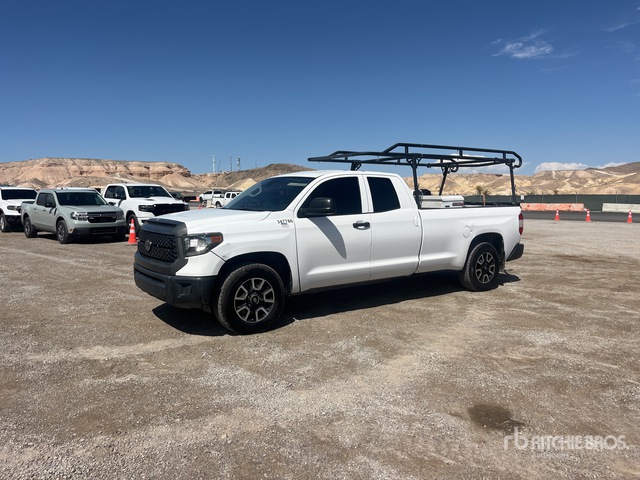 2018 Toyota Tundra Pickup
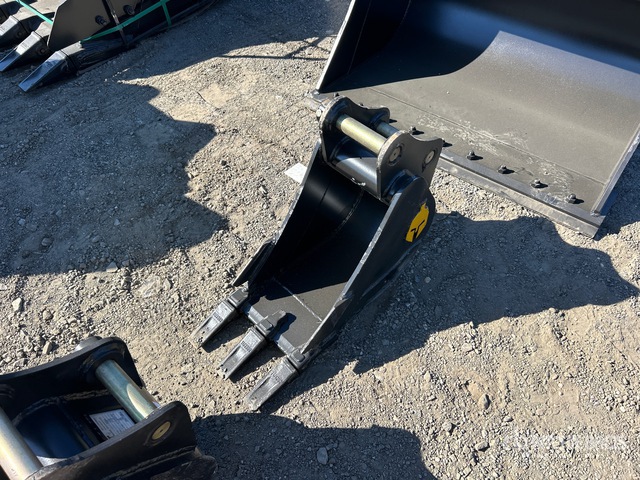 Trojan 35CL Excavator Bucket
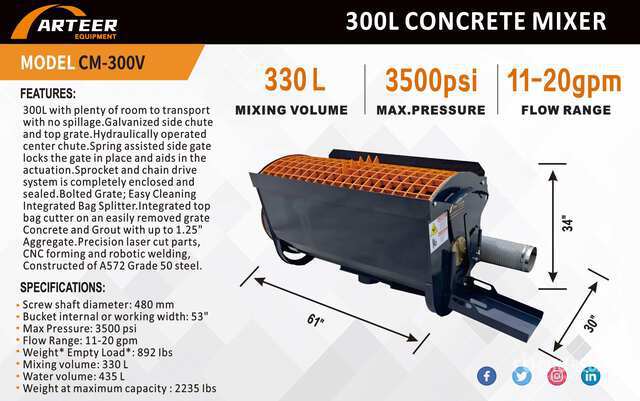 2026 ARTEER CM-300V Skid Steer Concrete Mixer
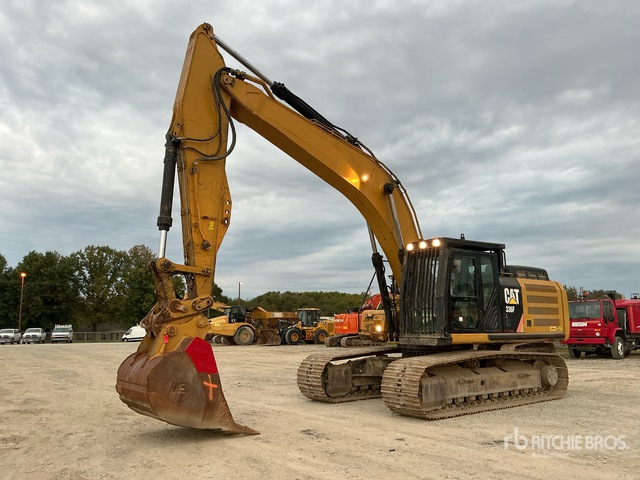 2018 Cat 336F L Tracked Excavator
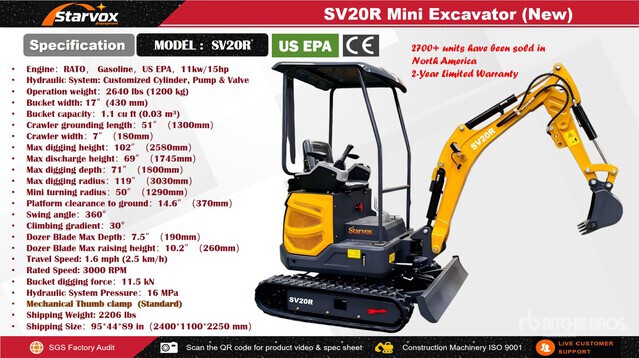 2026 STARVOX SV20R Mini Excavator: <6.6t
 2026 SDLOOL SL-EC15 Trike
 2026 MTO A40HC-2 Storage Container
 2006 Mustang MTL25 Compact Track Loader
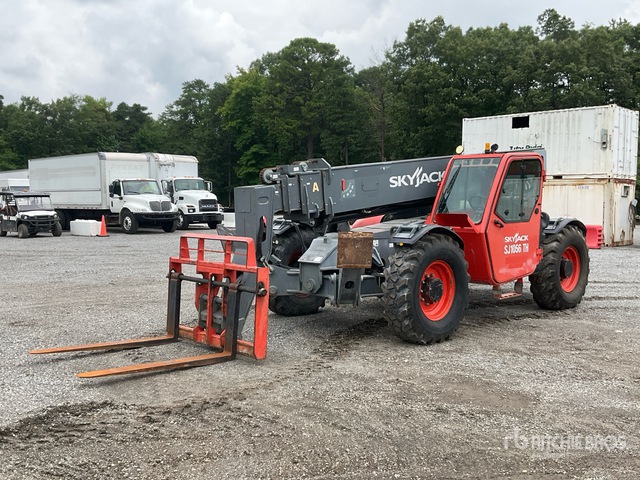 2018 Skyjack SJ1056TH Telehandler
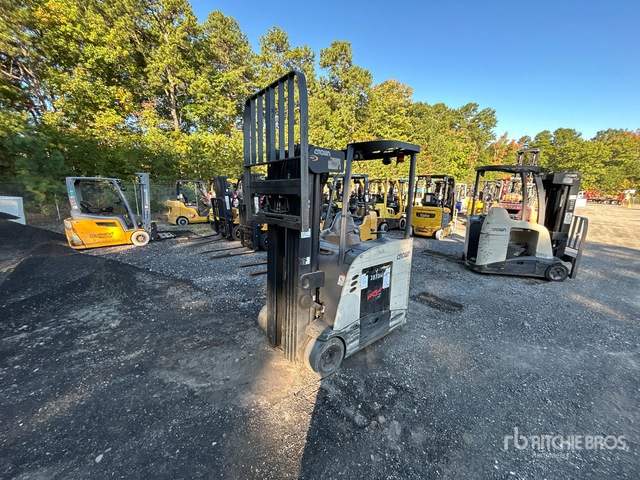 2019 Crown RC5545-40 Electric Forklift
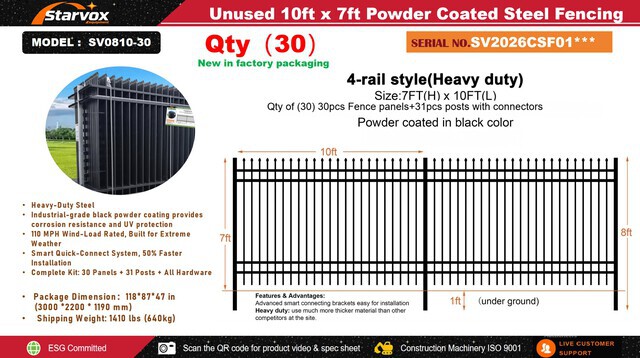 2026 STARVOX SV0810-30 Fencing
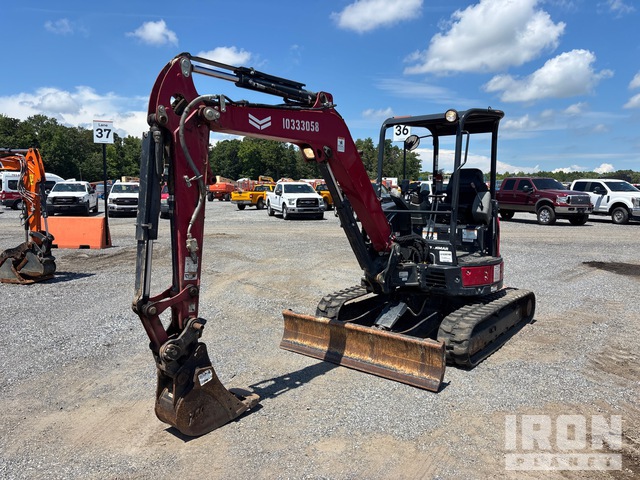 2021 Yanmar ViO35-6A Mini Excavator: <6.6t
 Electric Motor
 2026 Top Cat HDRC Skid Steer Brush Cutter